
Overview
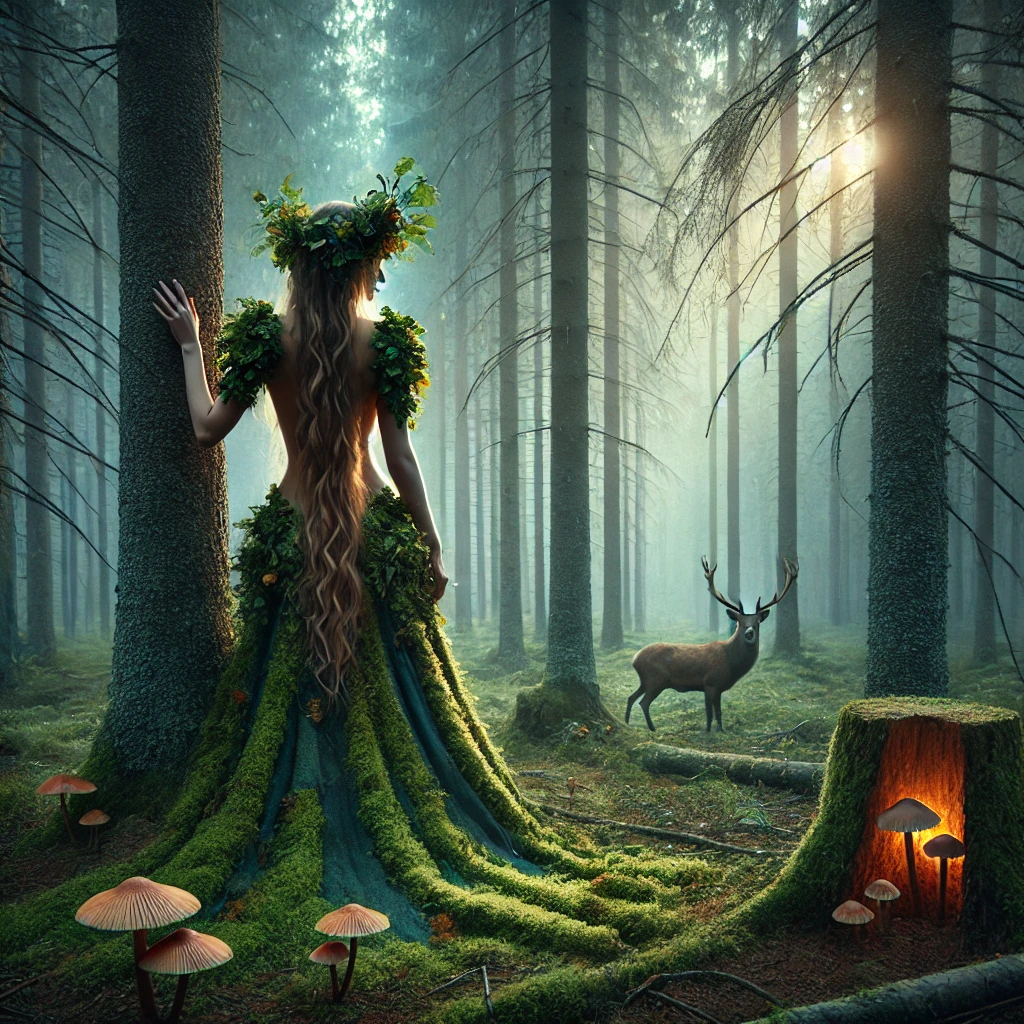
The Huldra (plural: Huldrefolk) are mysterious and enchanting forest beings from Scandinavian folklore, particularly prominent in the mythologies of Norway and Sweden. Often described as beautiful, alluring women with long hair and a hollow back or a tail, the Huldra are nature spirits of the forest, closely tied to trees, wild animals, and the untamed energy of the natural world.
While frequently associated with seduction and shape-shifting, the Huldra are not malicious by nature. They are guardians of the wilderness, protectors of sacred balance, and spiritual intermediaries between humans and nature. Depending on how they are approached, they can be generous allies or formidable opponents—offering blessings to those who respect the forest or misfortune to those who exploit it.
Etymology and Origins
- The name Huldra comes from the Old Norse word hulda, meaning “hidden” or “secret.”
- The Huldra are part of the Hidden Folk or huldufólk, supernatural beings believed to dwell in remote areas, unseen by ordinary humans unless they choose to reveal themselves.
- Related figures exist in broader Germanic and Celtic traditions, such as forest nymphs, dryads, and fae women, but the Huldra have distinct Scandinavian traits.
Appearance and Traits
| Characteristic | Description |
|---|---|
| Form | Beautiful woman, often with long flowing hair |
| Tail | Cow or fox tail, hidden beneath her dress |
| Back | Sometimes hollow like a rotten tree trunk |
| Aura | Wild, hypnotic, earthy, and both seductive and unsettling |
| Voice | Often sings haunting melodies or calls out in the woods |
The Huldra’s appearance symbolizes the dual nature of enchantment and wilderness—beautiful and dangerous, nourishing and untamed. Her hollow back suggests that she is of another realm, a being of illusion or otherworldly origin.
Role in Folklore and Myth
1. Guardian of the Forest
The Huldra protects the animals, trees, and spirit of the forest. She punishes those who harm nature unjustly and rewards those who show reverence and care.
2. Seducer and Tester
She is known to approach lone travelers—particularly men—testing their respect, truthfulness, or moral character. If mistreated or lied to, she may vanish, curse, or lead them astray.
3. Ally and Wife
In some tales, a Huldra may fall in love with a human and marry him, often retaining her powers unless forced to become fully human through baptism. Once baptized, she becomes mortal and loses her magic and beauty, suggesting the loss of her wild, sacred essence.
Spiritual and Symbolic Significance
| Aspect | Meaning |
|---|---|
| Wilderness | Embodiment of untamed nature and instinctive wisdom |
| Liminality | Dweller of thresholds between seen and unseen, human and spirit |
| Sacred Feminine | Representation of feminine mystery, beauty, and natural power |
| Balance | Reflects the consequences of harmony or exploitation of the natural world |
The Huldra challenges modern notions of control over nature, reminding humans that the wild must be respected and cannot be possessed without consequence.
Encounters and Interpretations
1. Signs of Her Presence
- Whispers or singing in the forest with no visible source
- Sudden feelings of enchantment, fear, or being watched
- Animal trails that seem to lead in circles or vanish
- Dreams of a mysterious woman in the woods offering guidance or riddles
2. Honoring the Huldra
- Speak and act with respect when entering forests or remote areas.
- Leave small offerings—such as bread, milk, wildflowers, or songs—at the base of old trees or along untouched paths.
- Avoid littering, cutting trees without intention, or disturbing wildlife.
3. Spiritual Connection
- Meditate in a quiet forest setting and invite the spirit of the Huldra to share her teachings.
- She may bring guidance about personal freedom, reclaiming intuition, boundaries, or healing your wild feminine (regardless of gender).
Lessons from the Huldra
| Theme | Teaching |
|---|---|
| Respect for Nature | Treat the forest as a sacred place; all beings within it have spirit |
| Mystery and Discernment | Not all beauty is benign; look beyond appearances |
| Authenticity | Be honest in word and heart—illusion cannot hide true intent |
| Wildness | Embrace the untamed aspects of self and life without shame |
| Reciprocity | Give as much as you take; balance is the law of the forest |
Conclusion
The Huldra is a captivating embodiment of the wild, feminine soul of the forest—both alluring and unforgiving, ancient and present. She reminds us that nature is not here merely to serve us, but to be in relationship with us, demanding respect, awareness, and humility.
To walk the path of the Huldra is to walk the edges—to listen more closely to the whispering trees, to honor the mysteries of the wild, and to remember that in the deepest parts of the forest, something ancient still watches, waits, and wonders if we’ve forgotten how to listen.