
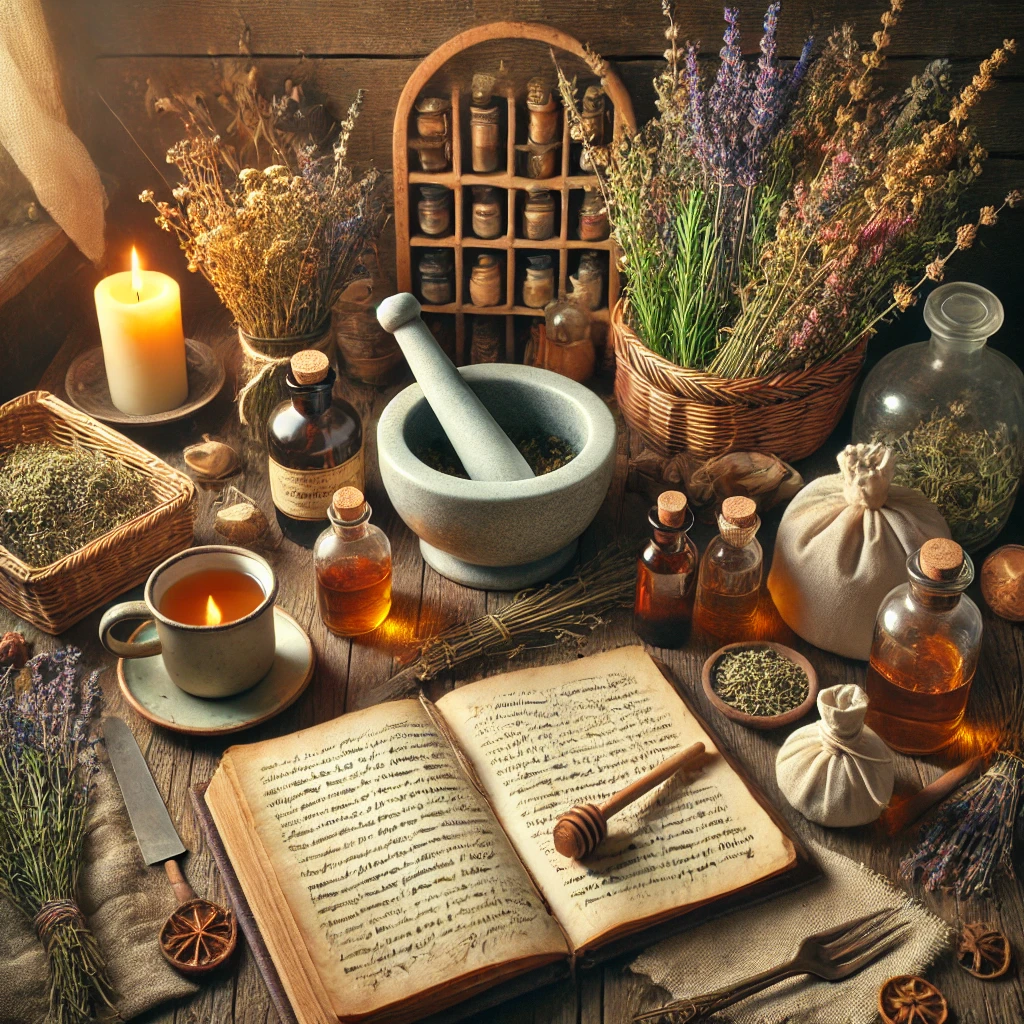
Overview
Western Herbalism is a system of plant-based healing rooted in the European and North American herbal traditions, blending folk medicine, monastic botanical knowledge, and Indigenous plant wisdom. At its heart lies a tradition of earth-centered healing passed down through generations—often by midwives, healers, herbalists, and wise women—who worked with the land to heal both body and spirit.
These practices emphasize accessible, kitchen-based remedies using local plants for physical ailments, emotional well-being, and spiritual protection. Today, Western herbalism is experiencing a resurgence as people reconnect with ancestral healing, nature’s pharmacy, and the soul of the plants.
Foundations of Western Herbalism
| Tradition | Influence |
|---|---|
| European Folk Healing | Village herbalists, wise women, midwives, and seasonal herbal wisdom |
| Greek & Roman Herbalism | Galen, Dioscorides, and Hippocratic principles of humoral balance |
| Monastic Medicine | Medieval herb gardens, spiritual healing, and Christian herbal philosophy |
| Native North American Influence | Indigenous plant wisdom integrated into settler herbal knowledge |
| Eclectic & Thomsonian Traditions | 19th-century American herbal revival and plant energetics |
Key Principles of Western Folk Herbalism
| Principle | Application |
|---|---|
| Holism | Treats the whole person—body, mind, and spirit—not just symptoms |
| Energetics of Plants | Matches herbs to the individual’s constitution (hot/cold, damp/dry) |
| Local & Seasonal Plants | Uses what grows nearby, often harvested with moon and seasonal cycles |
| Kitchen as Apothecary | Remedies made from everyday herbs, foods, oils, and wild plants |
| Spiritual Connection | Recognizes the soul and spirit of the plant as an ally in healing |
| Healer as Listener | Emphasizes intuition, observation, and relational listening over diagnostics |
Common Folk Remedies and Their Purposes
| Remedy | Purpose |
|---|---|
| Garlic & Onion Syrup | For colds, immune boost, and lung clearing |
| Elderberry Elixir | Viral protection and immune modulation |
| Chamomile Tea | Soothes digestion, calms nerves, aids sleep |
| Nettle Infusion | Mineral-rich tonic for energy, blood health, and stress support |
| Comfrey Poultice | Heals bruises, sprains, and minor injuries (external only) |
| Vinegar Infusions (Oxymels) | Combines herbs with apple cider vinegar and honey for immunity and detox |
| Herbal Steams | Used for respiratory support or energetic cleansing |
| Bitters (Dandelion, Gentian) | Stimulate digestion, liver function, and emotional processing |
Spiritual and Magical Aspects of Folk Herbalism
Folk herbalism has always recognized the spiritual intelligence of plants, using them in protection spells, healing charms, and rites of passage.
| Use | Spiritual Role |
|---|---|
| Smudging & Smoke Cleansing | Uses herbs like mugwort, rosemary, or sage to cleanse energy |
| Tinctures as Spirit Medicine | Taken in prayer or ritual to shift energy and intention |
| Wreaths & Herbal Charms | Hung on doors or worn for protection and blessing |
| Flower Baths | For emotional healing, new beginnings, or grief release |
| Moon-Infused Oils | Charged with celestial energy for anointing or ritual use |
| Plant Offerings | Herbs placed at sacred trees, streams, or altars in exchange for healing |
Plant Allies of the Western Herbal Tradition
| Plant | Use |
|---|---|
| Yarrow | Wound healer, boundary protector, emotional strength |
| Rosemary | Memory, protection, clarity, purification |
| St. John’s Wort | Nerve tonic, solar medicine, energetic protection |
| Mullein | Respiratory support, lung grief, ancestral healing |
| Calendula | Skin repair, lymph movement, emotional warmth |
| Lavender | Calming, heart support, sleep, spiritual connection |
| Motherwort | Heart medicine for anxiety, fear, and maternal trauma |
| Dandelion | Liver health, digestion, letting go emotionally and physically |
| Hawthorn | Heart strength, blood pressure, grief and protection |
Tools of the Folk Herbalist
| Tool | Use |
|---|---|
| Mortar and Pestle | Grinding fresh herbs for poultices or teas |
| Infusion Jars | Making teas, solar waters, or long steeps for mineral extraction |
| Tincture Bottles | Alcohol- or glycerin-based extracts for long-term herbal preservation |
| Herbal Bundles | For drying, smudging, or hanging in kitchens and sacred spaces |
| Herb Grimoire or Journal | Recording plant experiences, dreams, recipes, and moon cycles |
Modern Revival and Adaptation
Western herbalism continues to evolve, blending traditional knowledge with scientific research, trauma-informed care, and energy medicine. Today’s practitioners are reweaving:
- Ancestral healing with modern wellness
- Community herbalism and mutual aid
- Trauma-aware practices rooted in nervous system support
- Spiritual herbalism that honors plant sentience and sovereignty
Ethical and Cultural Considerations
- Respect Indigenous contributions that have shaped modern Western herbalism
- Avoid appropriation—honor the cultural and spiritual contexts of sacred herbs
- Practice sustainability and reciprocity—only harvest what is needed, and always give thanks
- Remember: folk medicine is people’s medicine—it belongs to no one and yet is sacred to all
Related Subcategories
This entry fits within:
- Herbal Healing Systems
- Plant Spirit Medicine
- Folk & Ancestral Traditions
- Rituals & Ceremonial Tools
- Mind-Body-Spirit Therapies
Visual Element Recommendation
Suggested Visuals:
- Infographic: “10 Classic Folk Remedies in Western Herbalism”
- Background Image: “Wooden Herbal Table with Drying Herbs, Mortar, and Folk Tools”
- Carousel Post: “Folk Herbalism: Plant Wisdom from Root to Remedy”