
Overview
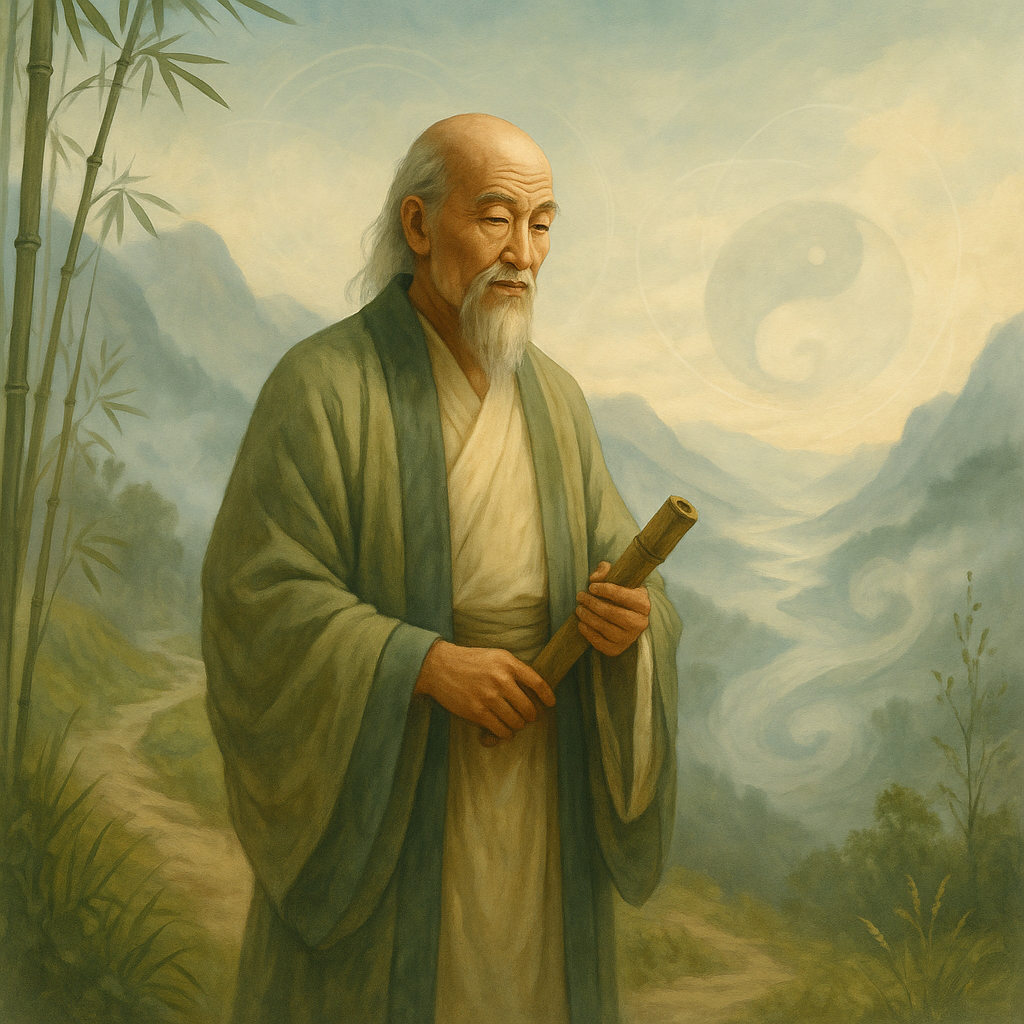
Laozi (also spelled Lao-Tzu or Lao-Tze), traditionally dated to the 6th century BCE, is revered as the legendary founder of Taoism and the author of the Tao Te Ching, one of the most influential spiritual and philosophical texts in history. His teachings center on living in harmony with the Tao—the natural, effortless flow of existence—and emphasize simplicity, humility, compassion, and inner stillness.
Historical Background
Identity and Origins
- Believed to have been born in ancient China, possibly in the state of Chu
- Often described as a wise archivist or scholar within the Zhou imperial court
- Historical existence remains debated—may represent a collective lineage of sages
Departure from Society
- According to tradition, left civilization seeking solitude and natural living
- Requested to write down his teachings before crossing the western border
- Produced the Tao Te Ching and disappeared from recorded history
Core Teachings and Philosophy
The Tao – The Way
- The Tao is the foundational reality underlying all existence
- It is eternal, indescribable, formless, and self-arising
- Human harmony emerges by aligning with its natural flow
Wu Wei – Effortless Action
- Act without force, resistance, or ego-driven struggle
- Allow life to unfold organically rather than through control
- True strength lies in receptivity and flexibility
Simplicity, Stillness, and Balance
- Let go of excess, ambition, and attachment
- Cultivate inner quiet to perceive truth clearly
- Recognize yin and yang as complementary forces of the universe
The Tao Te Ching
Structure and Themes
- 81 short poetic chapters
- Explores metaphysics, leadership, ethics, personal conduct, and cosmic order
- Uses paradox, imagery, and metaphor to convey deeper wisdom
Interpretive Nature
- Not a dogmatic text—invites reflection, contemplation, and inner realization
- Translation and meaning vary widely based on perspective and experience
Taoism and Cultural Influence
Philosophical Taoism
- Encourages introspection, humility, compassion, and natural living
- Sees life as cyclical, interconnected, and constantly transforming
Religious Taoism
- Developed centuries later, incorporating rituals, deities, meditation, and alchemy
- Laozi venerated as an immortal sage or divine incarnation
Broader Impact
- Influenced Chinese medicine, martial arts, poetry, governance, and aesthetics
- Inspires global spiritual, ecological, and mindfulness movements
Metaphysical and Esoteric Interpretations
Inner Alchemy
- Spiritual transformation arises from balancing energies within the body and mind
- Harmonizing with the Tao leads to clarity, vitality, and inner freedom
Nature as Teacher
- The Tao expresses itself through rivers, mountains, wind, and stillness
- Observing nature reveals universal rhythms and wisdom
Legacy and Significance
Enduring Relevance
- Offers guidance for navigating modern complexity with calm and awareness
- Encourages compassion, nonviolence, and interconnected living
Symbol of Timeless Wisdom
- Represents the power of softness over rigidity
- Reminds humanity that true mastery begins with humility
Key Symbols and Associations
Spiritual Symbolism
- Yin-Yang: balance, duality, harmony in opposites
- Water: adaptability, gentleness, unstoppable strength
- Empty Vessel: openness, receptivity, limitless potential
- Pathway or flowing river: the unfolding of the Tao
Laozi remains a profound teacher of presence, balance, and effortless being—inviting seekers to trust the natural flow of life, return to simplicity, and rediscover the quiet wisdom already within.