
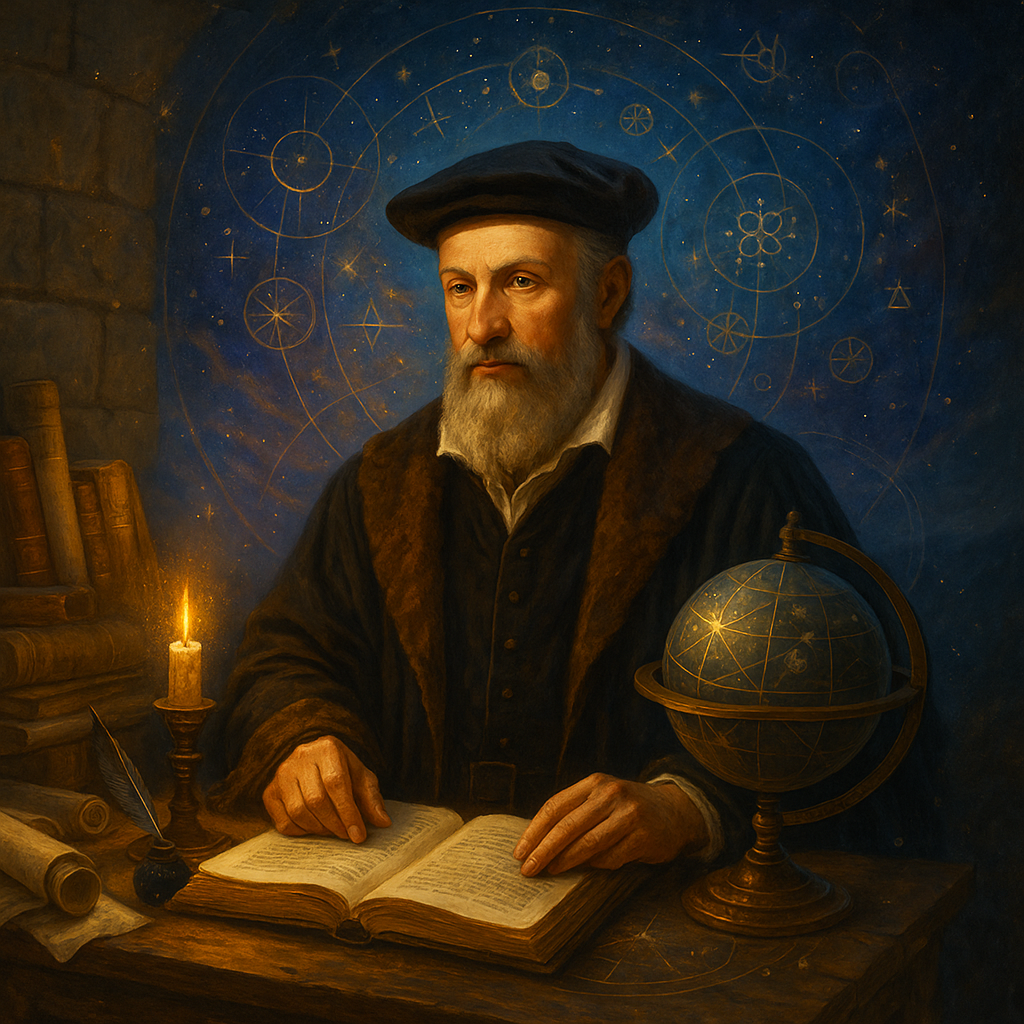
Overview
Nostradamus (1503–1566), born Michel de Nostredame, was a French physician, astrologer, and writer best known for Les Prophéties—a collection of cryptic verses believed by many to predict future world events. His reputation as a prophetic visionary has endured for centuries, inspiring fascination, debate, and cultural mythology. Blending astrology, symbolism, historical awareness, and poetic ambiguity, he remains one of history’s most famous seers.
Historical Background
Early Life and Education
- Born in Saint-Rémy-de-Provence, France, to a Jewish family that had converted to Christianity
- Educated in classical languages, mathematics, astronomy, and herbal medicine
- Studied at the University of Montpellier, eventually becoming a physician
Career as a Plague Doctor
- Traveled widely treating victims of recurring plague outbreaks
- Emphasized hygiene, fresh air, and herbal remedies—progressive for his time
- Became respected for medical skill and compassionate care
Turn Toward Astrology and Prophecy
Growing Interest in the Occult
- Studied astrology, divination, and esoteric traditions
- Believed celestial cycles influenced human affairs
- Developed a reputation for astrological consultations and predictions
Visionary Practices
- Used meditation, night observation, scrying, and symbolic analysis
- Wrote prophecies in quatrains—four-line poetic verses
Les Prophéties
Structure and Content
- First published in 1555
- Contains hundreds of quatrains organized into “Centuries” (sets of 100)
- Written in a blend of French, Latin, Greek, and Occitan
- Filled with metaphor, wordplay, historical references, and allegory
Purpose and Intent
- Claimed to foresee large-scale political, social, and natural events
- Meant to offer guidance while avoiding persecution by authorities
- Deliberately obscure to prevent misuse or misinterpretation
Interpretations and Cultural Influence
Claimed Predictions
Supporters believe he foresaw:
- The rise and fall of empires
- Natural disasters and pandemics
- Notable leaders, wars, and revolutions
- Technological, cultural, and global shifts
Skepticism and Debate
- Critics argue his verses are too vague and adaptable
- Prophecies retrofitted rather than predictive
- Lack of consistent historical accuracy
Influence Across Centuries
- Admired by monarchs, politicians, mystics, and occultists
- Continues to inspire books, documentaries, research, and speculation
- Cultural icon associated with prophecy and foresight
Metaphysical and Esoteric Perspectives
Symbolic Visionary
- Seen as a channel of archetypal, collective, or intuitive knowledge
- Prophecies viewed as energetic impressions rather than literal forecasts
Astrology as World Mirror
- Believed cosmic patterns reflected human consciousness and destiny
- Events understood through cycles, rhythms, and synchronicity
Timeless Mystique
- Represents humanity’s longing to understand the future
- Embodies intuition, imagination, and spiritual curiosity
Legacy and Historical Significance
Enduring Fascination
- Remains a global symbol of prophecy and mysterious insight
- Name synonymous with prediction and future speculation
Literary and Philosophical Impact
- Influenced occult philosophy, symbolic interpretation, and apocalyptic literature
- Serves as a study in ambiguity, language, and perception
Continuing Relevance
- Referenced during major world events
- Sparks conversations about fate, free will, and human destiny
Key Symbols and Associations
Spiritual Symbolism
- Quatrains: layered meanings and hidden truths
- Stars and celestial charts: astrology and cosmic order
- Mirror or bowl of water: scrying and mystical vision
- Candle or dim light: illumination through uncertainty
Nostradamus remains a captivating figure—part historian, part mystic, part poet. His legacy invites ongoing reflection on how humans interpret signs, create meaning, and seek understanding of the unknown future.