
Overview
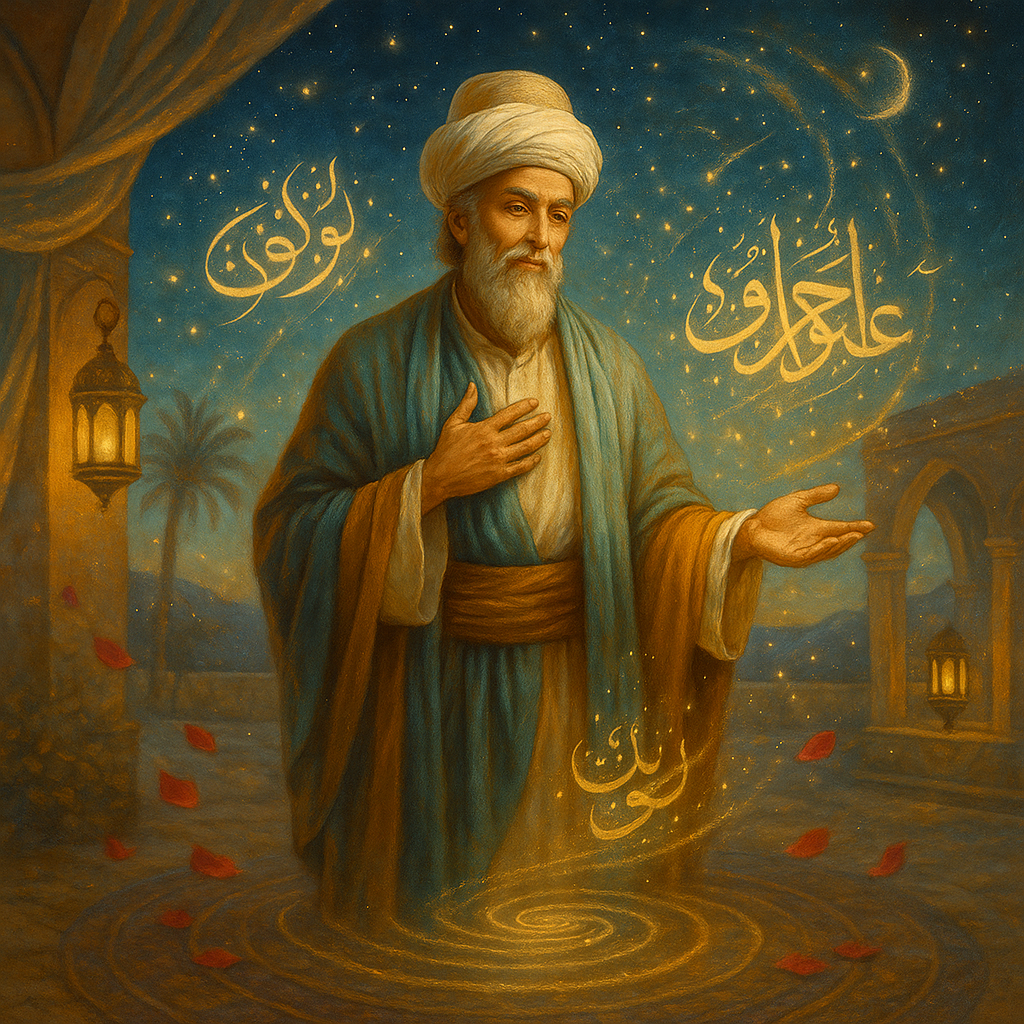
Jalāl al-Dīn Muhammad Rumi (1207–1273 CE) was a Persian Sufi mystic, Islamic scholar, and poet whose writings celebrate love, unity, spiritual longing, and the soul’s journey toward the Divine. Revered across cultural, linguistic, and religious boundaries, Rumi remains one of the most widely read and transformative poets in the world—embodying a universal message of compassion, inner awakening, and sacred connection.
Historical Background
Early Life and Education
- Born in Balkh (modern-day Afghanistan) and later settled in Konya, Turkey
- Raised in a scholarly family and trained in theology, jurisprudence, and Arabic literature
- Became a respected religious teacher and community leader
Meeting with Shams of Tabriz
- Encountered the wandering mystic Shams in 1244
- Their spiritual friendship awakened profound mystical insight and poetic expression
- After Shams’ disappearance, Rumi’s grief transformed into ecstatic devotion and creative revelation
Core Teachings and Spiritual Philosophy
Divine Love as the Path
- Love is the force that moves all existence
- Human longing reflects the soul’s desire to reunite with the Beloved—God
- Love dissolves ego, separation, and illusion
Unity of Being
- All creation is an expression of Divine presence
- Spiritual awakening reveals that lover, beloved, and love are One
Surrender and Transformation
- Spiritual growth requires humility, trust, and letting go
- Pain, loss, and longing serve as catalysts for inner awakening
Poetry, Imagery, and Symbolism
Themes in Rumi’s Poetry
- Union, longing, devotion, joy, and surrender
- The spiritual journey, self-discovery, and divine revelation
- Silence, music, nature, and friendship as spiritual metaphors
Symbolic Language
- Wine and intoxication: ecstatic love of God
- The reed flute: separation of the soul from its Source
- The moth and flame: surrender of ego to divine light
- The mirror: polishing the heart to reflect the Divine
Major Works
Masnavi (Mathnawi)
- Six volumes of mystical teaching poetry
- Considered a “Qur’an in Persian” within Sufi tradition
- Uses storytelling, parables, and allegory to convey spiritual wisdom
Divan-e Shams-e Tabrizi
- Collection of lyrical, ecstatic love poems dedicated to Shams
- Expresses longing, transformation, and divine union
Prose Works
- Discourses, letters, and sermons offering practical and philosophical guidance
Sufism and the Mevlevi Order
Spiritual Practices
- Meditation, prayer, chanting, poetry, and sacred companionship
- Emphasis on remembrance (dhikr) and presence with the Divine
Whirling Dervishes
- The Mevlevi Order, founded by Rumi’s followers, developed the Sema—a ritual dance symbolizing spiritual ascent, surrender, and cosmic harmony
Influence and Legacy
Global Spiritual Impact
- Transcends religious and cultural boundaries
- Inspires seekers of all paths—Muslim, Christian, Hindu, Jewish, Buddhist, secular, and interfaith
Literary and Cultural Influence
- One of the best-selling poets in the modern world
- Influenced philosophers, scholars, artists, musicians, psychologists, and mystics
Modern Relevance
- Offers guidance on healing, mindfulness, grief, love, and self-awareness
- Celebrates unity, compassion, and shared humanity
Metaphysical and Esoteric Perspectives
The Heart as a Spiritual Temple
- The Divine resides within each person
- Spiritual practice uncovers the sacred inner light
Journey of the Soul
- Life is a pilgrimage toward self-knowledge and divine remembrance
- Every experience contains a hidden teaching
Key Symbols and Associations
Spiritual Symbolism
- The Beloved: God, Source, or ultimate truth
- Spinning dancer: harmony, surrender, cosmic alignment
- Heart flame: divine inspiration and ecstatic love
- Open door or threshold: spiritual rebirth and awakening
Rumi’s poetry continues to speak across centuries—inviting humanity to remember its Divine origin, awaken the heart, and live through love. His words remain a timeless companion for anyone seeking wholeness, connection, and spiritual illumination.