
Overview
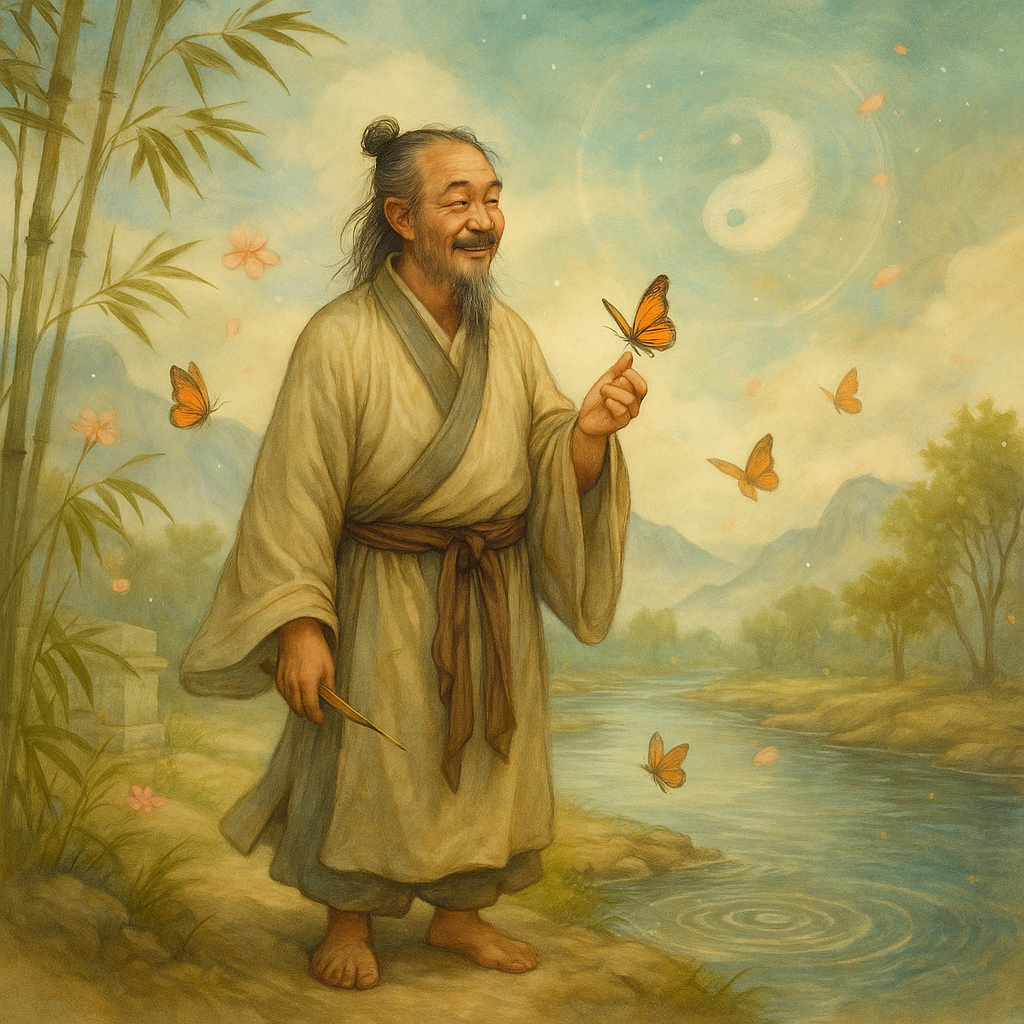
Zhuangzi (also spelled Chuang-tzu), traditionally dated to the 4th century BCE, was an influential Taoist philosopher whose writings celebrate freedom, spontaneity, naturalness, and inner harmony. Known for playful paradoxes, imaginative stories, and profound spiritual insight, he challenged rigid thinking and encouraged living in effortless alignment with the Tao. His philosophical style remains a defining expression of Taoist wisdom.
Historical Background
Life and Context
- Born in Meng, likely in the region of modern-day Henan, China
- Lived during the Warring States period—a time of intense political conflict and philosophical creativity
- Worked as a minor official before withdrawing from public life
Independent Spirit
- Rejected offers of political power and wealth
- Chose a simple, free, contemplative life rooted in nature
- Known for wit, humility, and skepticism toward authority
The Zhuangzi Text
Structure and Themes
- Composed of 33 chapters—Inner, Outer, and Miscellaneous writings
- Blends parables, humor, dialogue, allegory, and philosophical inquiry
- Explores perception, transformation, freedom, and the limits of language
Multiple Authors and Evolution
- Core teachings attributed to Zhuangzi
- Later chapters written by followers inspired by his vision
- Represents a collective Taoist philosophical tradition
Core Teachings and Philosophy
Harmony with the Tao
- The Tao is the spontaneous, ever-flowing source of life
- Wisdom arises from moving effortlessly with natural rhythms
Wu Wei – Effortless Action
- Best action arises without force, struggle, or overthinking
- Letting go of rigid plans allows creativity and clarity to emerge
Relativity of Perspectives
- No single viewpoint captures absolute truth
- Reality depends on perspective, perception, and context
- Encourages humility and open-mindedness
Freedom of the Spirit
- True liberation comes from releasing ego, judgment, and fear
- Live authentically, unconstrained by social expectations
Famous Parables and Symbolic Stories
The Butterfly Dream
- Zhuangzi dreams he is a butterfly, then wonders if the butterfly dreams it is Zhuangzi
- Illustrates fluid identity, illusion, and the mystery of consciousness
The Useless Tree
- A crooked tree survives because it is “useless” to society
- Challenges cultural definitions of value and productivity
Cook Ding Carving an Ox
- Mastery achieved through intuitive alignment, not force
- Symbolizes skill flowing naturally with the Tao
Spiritual and Metaphysical Insight
Letting Go of Distinctions
- Labels—good/bad, right/wrong—create division and suffering
- Transcending duality reveals deeper harmony
Transformation and Impermanence
- All beings undergo continuous change
- Accepting change brings peace and adaptability
Humor as Wisdom
- Playfulness loosens rigidity of intellect
- Laughter opens a doorway to spiritual understanding
Influence and Legacy
Taoist Tradition
- Considered second only to Laozi in shaping Taoist thought
- Deeply influenced Chinese spirituality, metaphysics, and aesthetics
Literature, Art, and Culture
- Inspired poetry, painting, calligraphy, martial arts, and Zen koans
- Revered for poetic language and imaginative storytelling
Global Philosophy
- Influences modern psychology, existentialism, ecology, and mindfulness
- Appeals to seekers valuing freedom, creativity, and authenticity
Modern Relevance
- Encourages simplicity in a fast-paced world
- Offers guidance for releasing anxiety, perfectionism, and identity pressure
- Invites intuitive living, emotional resilience, and compassionate awareness
Key Symbols and Associations
Spiritual Symbolism
- Butterfly: transformation, fluid identity, dreamlike reality
- Flowing water: flexibility, adaptability, natural ease
- Empty cup: openness, humility, receptive mind
- Useless tree: unconventional wisdom and authentic selfhood
Zhuangzi remains a luminous voice of joyful freedom—reminding humanity that wisdom arises not from striving, but from relaxed awareness, openness, and trust in the natural unfolding of life. His teachings continue to inspire a life of spontaneity, harmony, and effortless connection with the Tao.