
Overview
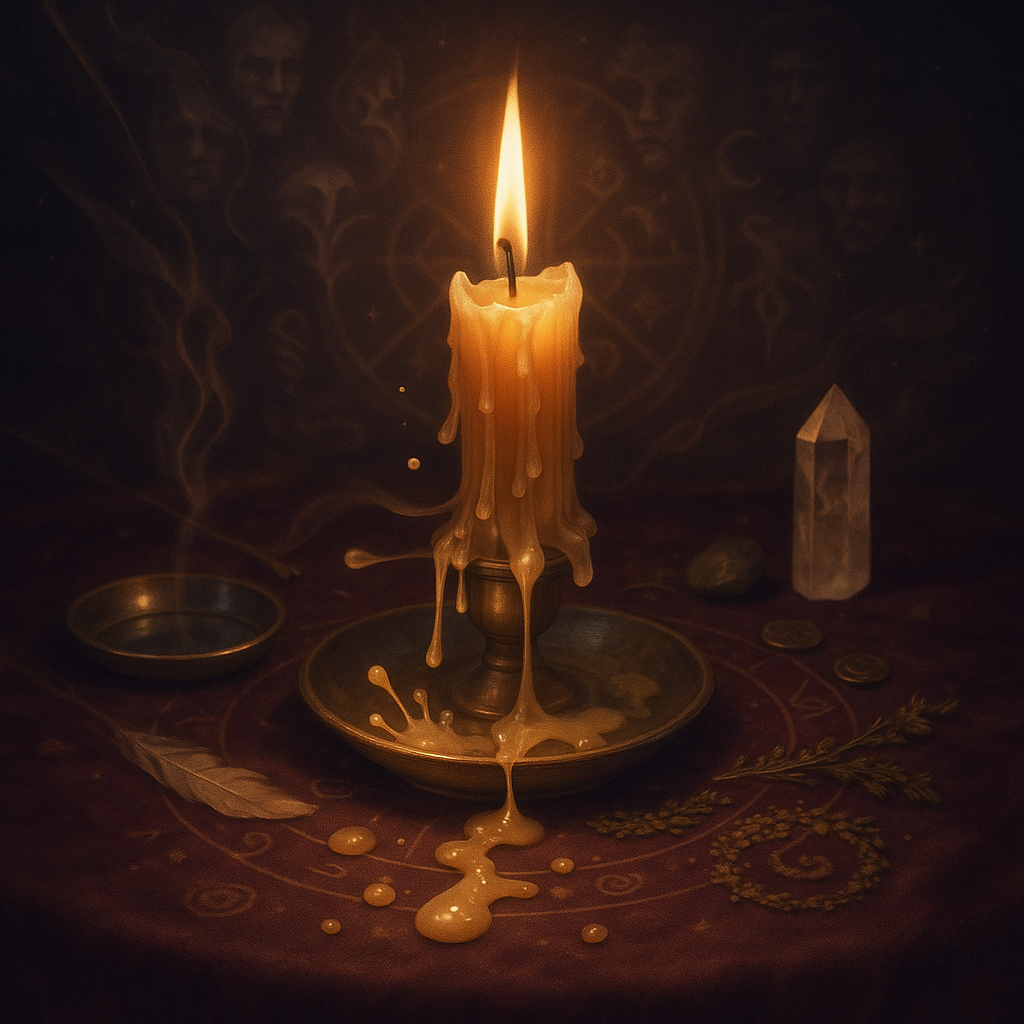
Candle wax reading—known as ceromancy—and flame interpretation are ancient divination practices that use the behavior of burning candles and the shapes formed in melted wax to reveal messages, guidance, and energetic insight. Often used in ritual, spellwork, and spiritual inquiry, these practices help practitioners understand hidden influences, emotional dynamics, and potential outcomes through symbolic observation of fire and wax.
Purpose of Ceromancy and Flame Reading
Receiving Energetic and Spiritual Messages
- Interprets the movement of flame and wax as communication from spirit guides, ancestors, or the divine
- Offers guidance during rituals, prayers, or spellwork
- Highlights energetic blockages, support, or direction
Enhancing Intuition and Awareness
- Strengthens symbolic perception and inner knowing
- Encourages practitioners to slow down and observe subtle energetic patterns
- Deepens understanding of ritual work and manifestation
Understanding Energies in a Situation
- Reveals hidden influences, emotional undercurrents, and obstacles
- Useful for decision-making, relationship questions, healing work, and spiritual insight
Flame Interpretation
Observing the Candle Flame
Strong, Tall, Steady Flame
- Indicates clarity, strength, and powerful energetic flow
- Suggests alignment, protection, and supportive forces at work
- Favorable sign for manifestation and divination
Weak or Low Flame
- Suggests blocked energy, resistance, or slow progress
- Indicates the need for patience, healing, or improved clarity
- May reflect fear, emotional exhaustion, or spiritual fatigue
Flickering Flame
- Sign of spiritual communication or shifting energy
- Represents messages attempting to break through
- May indicate instability in the situation depending on direction and intensity
Dancing or Jumping Flame
- Strong energetic activity, emotional intensity, or spiritual presence
- May signal rapid change, passion, conflict, or dynamic forces
- Reflects movement or transformation in the question asked
Flame Splitting or Forming Two Flames
- Indicates divided energies, choices, or influences
- May suggest involvement of two people, spirits, or paths
- Represents duality or conflicting intentions
Flame Going Out Unexpectedly
- A clear sign of closure, misalignment, or a need to rethink intention
- Suggests external interference or incomplete preparation
- Also may signal protection from unwanted outcomes
Ceromancy (Candle Wax Reading)
Methods of Wax Reading
Water Method
- Light the candle with a specific intention
- Allow wax to drip into a bowl of water
- Interpret the shapes, patterns, and textures formed as the wax cools
Free-Burn Method
- Observe how wax pools, streams, or piles up while the candle burns
- Used in spellwork to assess obstacles and energetic flow
Residue Method
- Interpret the final shapes left in the candle holder or surface
- Useful for understanding what energies persist after a ritual
Interpreting Wax Shapes and Patterns
Smooth, Even Wax
- Indicates harmony, balance, and clear outcomes
- Suggests alignment between intention and reality
Large Wax Clumps or Piles
- Represents obstacles, unresolved emotions, or heavy energy
- Suggests deeper inner work or persistence is needed
Tunnels or Holes
- Signify hidden influences or unknown factors
- May suggest subconscious or ancestral messages trying to surface
Running Wax or Streams
- Indicates movement, messages, or fluid emotional shifts
- Reflects rapid progress, transitions, or ongoing transformation
Symbols and Figurative Shapes
Wax may form shapes resembling:
- Animals: instincts, messages, archetypes
- People: relationships, communication, support
- Hearts, stars, arrows: love, destiny, guidance
- Bridges or pathways: choices, transitions, journeys
- Mountains or blocks: challenges or achievements
Interpretation depends on intuition, context, and symbolic tradition.
Color, Smoke, and Soot Interpretation
Candle Color Meanings
- White: purity, clarity, healing
- Black: protection, banishing, transformation
- Red: love, courage, vitality
- Green: prosperity, growth, grounding
- Blue: peace, truth, communication
- Purple: intuition, psychic development, spirituality
- Gold/Silver: divine connection, higher guidance
Smoke and Soot
Clean Burn with No Smoke
- Smooth energetic flow
- Clear communication and aligned intentions
White Smoke
- Spiritual support, cleansing, purification
- Ancestors or higher beings assisting
Dark or Black Smoke
- Releasing negativity or energetic blockage
- Burning away obstacles or external interference
Ritual Practices and Preparation
Setting Up the Space
- Cleanse with incense, herbs, or sound
- Set clear intentions or ask a specific question
- Place candle on a stable, fire-safe surface or altar
Enhancing the Divination
- Surround with crystals (selenite, quartz, obsidian, etc.)
- Use oils or herbs to dress the candle
- Invoke ancestors, guides, or deities for insight
- Meditate before beginning to open intuitive channels
Closing the Ritual
- Give thanks to spiritual helpers
- Record messages or symbols in a journal
- Safely extinguish or allow the candle to complete its burn (depending on tradition)
Spiritual and Esoteric Perspectives
Fire as a Messenger
- Fire symbolizes transformation, illumination, and spirit presence
- Flame behavior reflects the movement of energy and intention
Wax as a Mirror
- Wax reveals subconscious patterns and emotional landscapes
- The shapes act as metaphors or symbolic narratives
Ancestral and Spiritual Communication
- Flames may signify presence of guides or ancestors
- Wax forms may contain messages from the unseen realms
Key Symbols and Associations
Symbolic Elements
- Flame: energy, spirit, truth
- Wax: emotions, form, manifestation
- Smoke: transition, release, communication
- Color: intention, vibration, and elemental influence
Candle wax reading and flame interpretation offer a profound way to receive guidance from subtle energies, spiritual forces, and the inner self. Through observation, intuition, and ritual mindfulness, these practices become powerful tools for divination, healing, and intentional transformation—bringing the language of fire and wax into meaningful spiritual dialogue.