
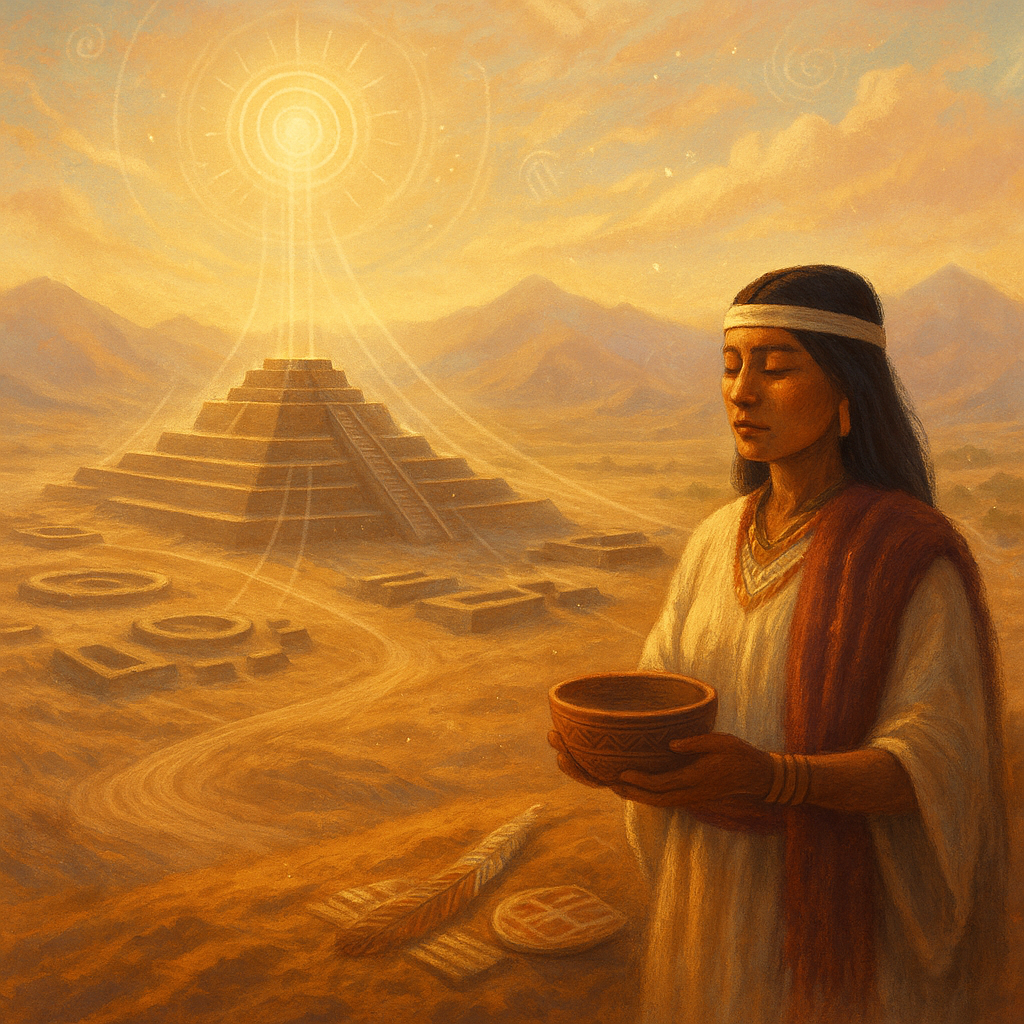
Overview
Caral-Supe, located in the Supe Valley of coastal Peru, is the oldest known city in the Americas and one of the earliest cradle civilizations in the world. Flourishing around 3000–1800 BCE, Caral predates the Inca, the Maya, and the Olmec, and is contemporary with ancient Egypt and Mesopotamia.
What makes Caral-Supe extraordinary is its monumental architecture—pyramids, sunken plazas, ceremonial complexes—combined with an absence of warfare. Instead, evidence points to a culture that advanced through trade, music, astronomy, and communal ritual rather than conflict.
To many researchers and spiritual seekers, Caral represents a peaceful, harmoniously organized civilization rooted in sacred science, ecological balance, and ceremonial life. As one of the world’s earliest planned cities, Caral offers a glimpse into humanity’s ancient spiritual intelligence.
Spiritual and Cultural Significance
A Civilization Built on Harmony, Not War
- No weapons, fortifications, or warlike artifacts found
- Suggests society organized around cooperation, ritual, and trade
Center of Sacred Architecture
- Pyramids, circular plazas, and aligned structures reflect cosmological awareness
- Spaces designed for ceremonies, music, and communal gatherings
Birthplace of Andean Civilization
- Foundation of later spiritual traditions of the Andes
- Roots of reciprocity, earth reverence, and cosmic alignment
Historical and Archaeological Context
Discovery and Research
Rediscovery in the 1990s
- Brought to global attention by archaeologist Ruth Shady
- Recognized as the earliest known city in the Americas
UNESCO World Heritage Site (2009)
- Acknowledged for its antiquity and monumental architectural innovation
Timeline
Early Development (3000 BCE)
- Formation of multi-site urban complex in the Supe Valley
- Caral emerges as the ceremonial and administrative center
Expansion and Influence (2600–2000 BCE)
- Construction of major pyramids and plazas
- Long-distance trade networks flourish
Gradual Decline (after 1900 BCE)
- Environmental shifts and river movement may have contributed to abandonment
Architectural and Spiritual Features
1. Monumental Pyramids
Great Pyramid of Caral
- 18-meter-tall stepped platform
- Constructed with stone, earth, and reed baskets
- Likely center of ceremony, leadership, and astronomical observation
Other Pyramidal Complexes
- More than 30 monumental structures across the region
- Served as temples, gathering sites, and cosmic markers
2. Sunken Circular Plazas
Symbol of Unity and Ritual
- Designed for communal ceremonies, dance, and sound-based rituals
- Acoustically resonant structures
- Represented the connection between the earthly and cosmic realms
3. Residential and Administrative Zones
Planned Urban Layout
- Elite residences near pyramids
- Common housing aligned with communal life
- Demonstrates early social organization and labor coordination
Advanced Knowledge and Mystical Insights
1. Sacred Geometry and Architectural Alignment
Proportions and Layout
- Pyramids and plazas follow geometric patterns
- Layout suggests knowledge of astronomy and cardinal directions
Cosmological Symbolism
- Circular plazas represent cycles of time
- Pyramids represent mountains or cosmic platforms
2. Astronomy and Celestial Observation
Solar and Lunar Alignments
- Buildings oriented to solstice sunrises and sunsets
- Evidence of calendrical tracking for agriculture and ritual
Andean Cosmic Vision
- Early expression of the Andean worldview (cosmovisión)
- Emphasis on harmony between humanity, cosmos, and Earth
3. Music and Sound Frequency
Quipu and Flutes
- Dozens of bone flutes discovered, some tuned to specific frequencies
- Suggests ritual music played a central spiritual role
Use of Sound in Rituals
- Sunken plazas amplified voice and instrumental resonance
- Possibly used for healing, trance states, or community bonding
4. Early Quipu (Khipu) System
Proto-Writing and Record-Keeping
- Earliest known knotted-string recording devices found
- Likely used for trade, administration, or sacred coding
Spiritual and Social Structure
1. Priest-Leaders and Ritual Specialists
Role of Spiritual Leadership
- Led ceremonies on pyramids and plazas
- Served as mediators between people and cosmic forces
2. Trade-Based Economy
Network of Exchange
- Traded gourds, cotton, fish, shells, and exotic goods
- Connected coastal and highland cultures
Symbolic Economy
- Cotton used for fishing nets, ritual clothing, and sacred textiles
3. Community and Cooperative Labor
A Society Without Weapons
- Evidence suggests collaboration, not conflict, drove development
- Rituals likely used to maintain social cohesion
Mystical and Esoteric Interpretations
Earth-Based Spirituality
Harmony with the Land
- Construction used natural materials
- Structures integrated into landscape contours
Reverence for Pachamama
- Early Andean traditions include Earth as a living being
- Caral may reflect an ancestral expression of this belief
Energetic Architecture
Power Centers and Vortices
- Pyramids believed to anchor energy or amplify ritual potency
- Circular plazas viewed as energetic conduits
Ritual of Sound and Light
Acoustics in Spiritual Practice
- Architecture designed to resonate sound in specific ways
- May have been used for healing or trance induction
Influence on Later Andean Civilizations
Chavín, Nazca, Moche, and Inca
- Shared concepts of sacred geometry
- Ritual plazas and stepped architecture
- Cosmological alignment with mountains and stars
- Use of quipu for record-keeping
Continuity of Andean Spirituality
Elements preserved over millennia:
- Reciprocity (ayni)
- Earth reverence
- Sun and moon rituals
- Community-based ceremony
Symbolism and Iconography
Key Symbols
- Circles (wholeness, cosmic cycles)
- Stepped pyramids (ascension, mountain worship)
- Geometric orientation (cosmic order)
Spiritual Themes
- Harmony instead of war
- Ritual as social foundation
- Earth-cosmos balance
- Sound as a spiritual tool
Cautions and Considerations
Avoiding Over-Speculation
- Many spiritual interpretations are hypotheses
- Archaeological evidence guides but does not confirm mystical claims
Respect for Indigenous Traditions
- Caral is ancestral heritage for Andean peoples
- Interpretations should honor this lineage
Distinction Between Academic and Esoteric Views
- Historical data offers structure
- Metaphysical insights enrich but should not override evidence
Key Associations
Energetic Correspondences
- Element: Earth / Air (sound and wind)
- Themes: Peaceful development, cosmic alignment, sacred architecture
Spiritual Archetypes
- Earth stewards
- Temple guardians
- Sound healers
- Early civilization builders
Caral-Supe stands as a testament to humanity’s ancient capacity for peace, innovation, and spiritual harmony. As the oldest known city in the Americas, it reveals a civilization whose power came not from warfare but from unity, sacred architecture, cosmological understanding, and the harmonious integration of people with their environment and the cosmos.