Introduction: Small Shifts, Profound Change
There’s a moment many people quietly experience—when you realize that pushing harder isn’t making you feel better.
You’re managing your responsibilities, showing up for others, and trying to stay positive… yet something feels heavy beneath the surface. Your mind feels cluttered, your emotions unpredictable, and your energy inconsistent.
This is often not a failure of effort—it’s a sign that your mental and emotional well-being needs a different kind of support.
Holistic habits focus on the connection between your mind, body, and spirit. Instead of quick fixes, they offer sustainable, nurturing practices that create real, lasting transformation.
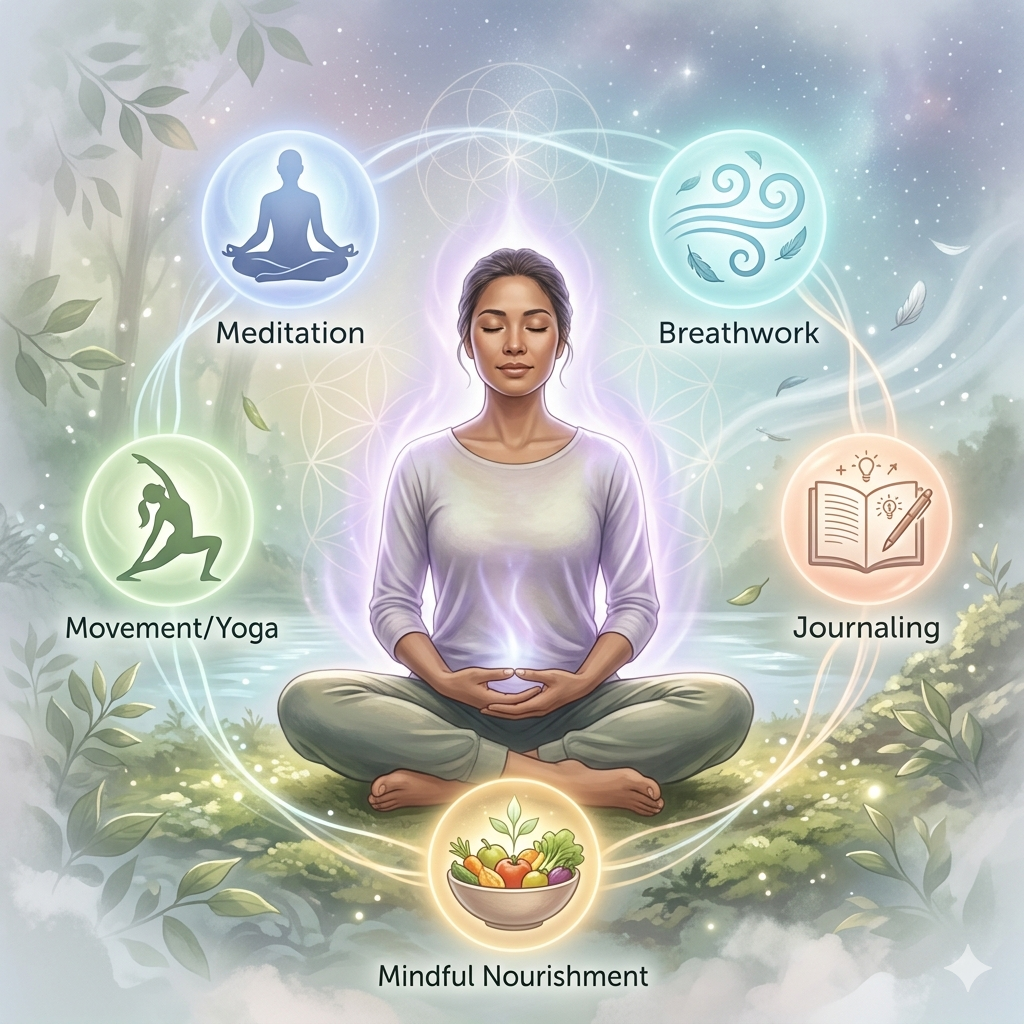
If you’re ready to feel more grounded, clear, and emotionally balanced, these five holistic habits can help you reconnect with yourself—one intentional step at a time.
Why Holistic Habits Matter for Mental and Emotional Health
Beyond Surface-Level Solutions
True well-being isn’t just about managing symptoms like stress or anxiety. It’s about addressing the root—your daily patterns, your internal dialogue, and how you care for your energy.
Holistic habits support:
- Emotional resilience and stability
- Mental clarity and focus
- Reduced stress and overwhelm
- A deeper sense of inner peace
These are not dramatic changes. They are small, consistent actions that gently reshape how you experience your life.
1. Mindful Awareness: The Foundation of Emotional Balance
Why It Matters
Many emotional struggles come from being disconnected from the present moment. When your mind is constantly in the past or future, stress and anxiety increase.
How to Practice
Start with Simple Mindfulness
- Take 5 minutes daily to focus on your breath
- Notice your thoughts without reacting to them
- Gently bring your attention back when it drifts
Bring Awareness Into Daily Activities
- Eat without distractions
- Pay attention while walking or doing routine tasks
- Pause and check in with your emotions
Emotional Insight
You don’t need to control every thought. You only need to become aware of them.
2. Intentional Movement: Releasing Stored Stress
Why It Matters
Your body holds onto emotional tension. Without release, this tension builds and affects both your mood and mental clarity.
How to Practice
Choose Movement That Feels Good
- Gentle yoga or stretching
- Walking in nature
- Light exercise that supports your energy level
Focus on Connection, Not Performance
- Notice how your body feels during movement
- Breathe deeply as you move
- Let go of pressure to “do it perfectly”
Emotional Insight
Movement is not just physical—it’s a way to process and release emotions.
3. Nourishing Your Inner Dialogue
Why It Matters
The way you speak to yourself shapes your emotional reality. Negative self-talk can quietly erode your confidence and well-being.
How to Practice
Become Aware of Your Inner Voice
- Notice critical or limiting thoughts
- Ask: “Would I say this to someone I care about?”
Reframe with Compassion
- Replace harsh thoughts with supportive ones
- Use affirmations that feel realistic and grounding
Emotional Insight
Self-compassion is not weakness—it’s emotional strength.
4. Creating Space for Stillness and Reflection
Why It Matters
Constant stimulation leaves no room for processing emotions or gaining clarity. Stillness is where insight and healing begin.
How to Practice
Build a Daily Reflection Ritual
- Journal your thoughts and feelings
- Spend a few minutes in quiet reflection
- Ask yourself meaningful questions like “What do I need today?”
Limit Unnecessary Noise
- Reduce screen time, especially before bed
- Create moments of silence throughout your day
Emotional Insight
You don’t find clarity by doing more—you find it by creating space.
5. Practicing Gratitude and Emotional Reframing
Why It Matters
Your brain naturally focuses on problems. Gratitude helps shift your perspective and creates a more balanced emotional state.
How to Practice
Daily Gratitude Habit
- Write down three things you’re grateful for
- Reflect on why they matter to you
- Feel the emotion behind each one
Reframe Challenges
- Ask: “What can I learn from this?”
- Look for small positives even in difficult situations
Emotional Insight
Gratitude doesn’t ignore reality—it expands your ability to handle it.
How to Integrate These Holistic Habits Into Daily Life
Start Small and Stay Consistent
You don’t need to adopt all five habits at once. Choose one that resonates with your current needs and build from there.
Simple Daily Routine Example
- Morning: 5 minutes of mindfulness
- Midday: brief movement or stretch
- Evening: journaling and gratitude
Consistency matters more than intensity. Even small, daily actions can lead to meaningful transformation.
The Deeper Transformation: What to Expect
As you practice these habits consistently, you may begin to notice:
- Greater emotional stability
- Reduced anxiety and overwhelm
- Improved focus and clarity
- A stronger connection with yourself
This is the essence of holistic mental and emotional well-being—a steady, grounded sense of balance that supports every area of your life.
Your Next Step Toward Lasting Well-Being
You don’t need to wait for the “right time” to start feeling better.
Choose one habit. Practice it today. Let it be simple and imperfect.
If you’re ready to go deeper, consider creating a personalized self-care routine that aligns with your lifestyle and emotional needs. The more intentional you become, the more natural these practices will feel.
Because transformation doesn’t come from doing everything at once.
It comes from consistently choosing what supports your well-being.
And that choice begins with you.