
Overview
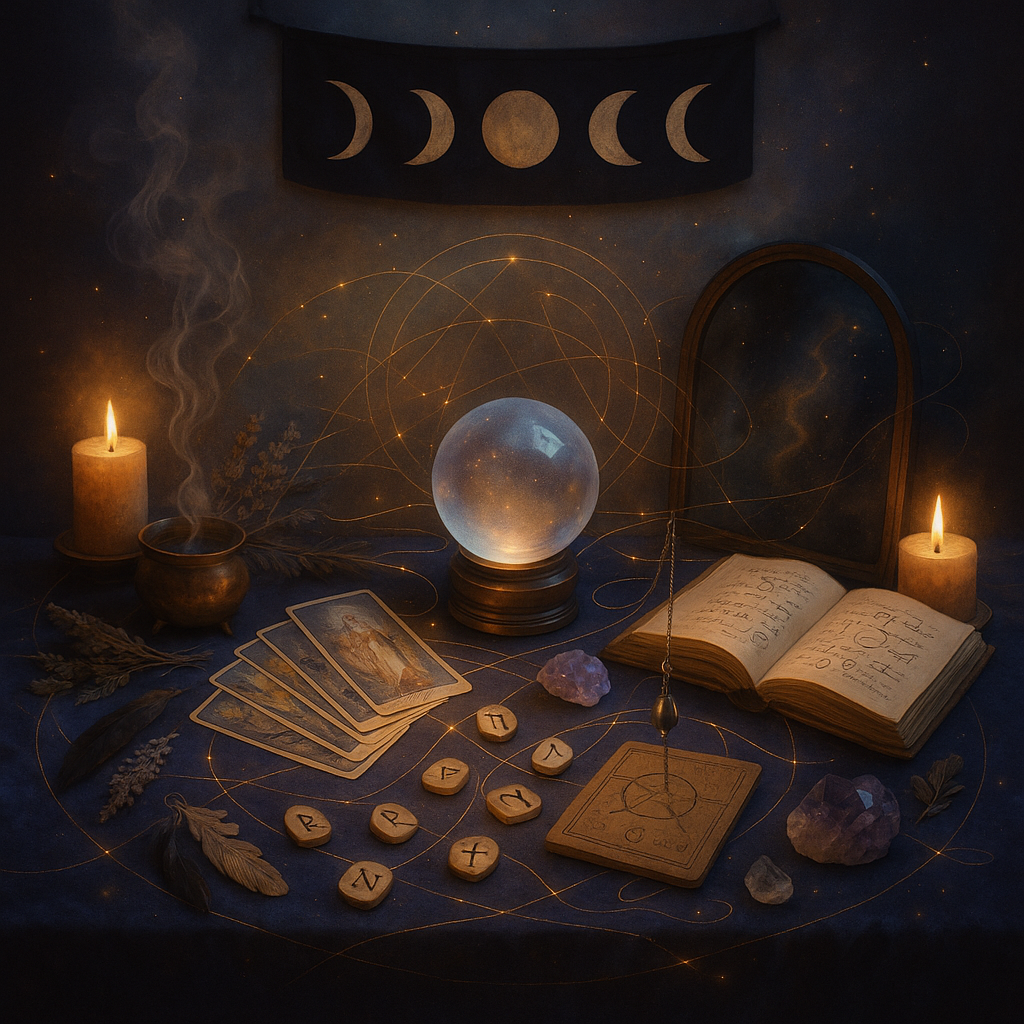
Altar tools for divination are sacred objects used to create a focused, intentional space for intuitive insight, spiritual communication, and symbolic interpretation. These tools help practitioners connect with higher guidance, tap into the subconscious, and receive messages through ritual, meditation, and symbolic systems. Each tool carries its own energetic function, history, and symbolic language, contributing to the overall purpose of divination: clarity, understanding, and alignment.
Purpose of Divinatory Altar Tools
Creating Sacred Space
- Establishes a designated environment for intuitive work
- Anchors energy, intention, and spiritual presence
- Helps shift awareness from the ordinary to the mystical
Enhancing Focus and Connection
- Supports meditation, concentration, and receptive states
- Amplifies intuition and symbolic perception
- Acts as a conduit for insight from the inner self or spiritual realms
Symbolic and Energetic Alignment
- Each tool embodies archetypal energies (elements, forces, deities, or cosmic principles)
- Together, they create a balanced and powerful divinatory setting
Common Altar Tools for Divination
Tarot and Oracle Cards
- Used for symbolic storytelling and intuitive interpretation
- Offer insight into situations, emotions, spiritual lessons, and future possibilities
- Often placed at the altar center to receive energy from other tools
Runes
- Ancient alphabetic symbols used for casting or drawing
- Provide concise, archetypal messages about challenges, guidance, and outcomes
- Stored in pouches or bowls and charged on the altar
Pendulums
- Used for yes/no questions, energy readings, and subtle communication
- Often paired with pendulum boards or charts
- Represent clarity, direct answers, and energetic sensitivity
Scrying Mirrors and Crystal Balls
- Tools for gazing, meditation, and receiving visionary impressions
- Reflect subconscious imagery and intuitive messages
- Associated with deep introspection and symbolic vision
Spirit Boards
- Used for communication with spirits, guides, or subconscious messages
- Require protection and grounding practices
- Often accompanied by candles, incense, or protective symbols
Energetic and Supportive Tools
Candles
- Represent illumination, focus, and spiritual presence
- Different colors correspond to different intentions
- Essential for grounding energy and creating ritual atmosphere
Incense and Herbs
- Purify space, raise vibration, and aid in spiritual connection
- Different scents support different types of divination work
- Act as offerings or energetic enhancers
Crystals and Stones
- Amplify intuition, clarity, and energetic protection
- Common stones include amethyst, labradorite, clear quartz, and obsidian
- Placed strategically to support psychic vision and grounding
Chalices and Bowls
- Hold water for scrying, cleansing, or symbolic representation of emotion and intuition
- Support elemental balance on the altar
Elemental Balancing Tools
The Four Elements
Divination altars often incorporate representations of:
- Earth: crystals, stones, salt, bowls
- Air: incense, feathers, bells
- Fire: candles, lanterns, flame symbols
- Water: chalices, scrying bowls, shells
Purpose of Elemental Balance
- Harmonizes energies to create a stable divinatory environment
- Helps the practitioner access different layers of intuitive information
- Supports grounding (earth), clarity (air), illumination (fire), and emotion/intuition (water)
Using Altar Tools in Divination Practice
Setting Intentions
- Begin with a clear purpose or question
- Align tools with that intention through placement, prayer, or visualization
Ritual and Preparation
- Cleanse the space with smoke, sound, or crystals
- Arrange tools mindfully and with symbolic intention
- Enter a meditative or receptive state before beginning
Receiving Insight
- Use chosen tools (tarot, runes, scrying, pendulum)
- Read symbols intuitively, not just literally
- Listen to emotional, energetic, and subconscious cues
Care and Maintenance of Divination Tools
Cleansing Practices
- Smoke cleansing, moonlight, salt, sound, or intention
- Removes residual energy and restores clarity
Storage and Respect
- Wrap tools carefully, place in pouches or boxes
- Treat the altar as a sacred space
- Regularly refresh the setup to maintain its energy
Personal Relationship
- Tools grow stronger as they bond with the practitioner
- Personal ritual, gratitude, and consistent use deepen their effectiveness
Key Symbols and Associations
Symbolic Meanings of Popular Tools
- Tarot deck: cosmic map of consciousness
- Pendulum: direct intuitive communication
- Scrying mirror: gateway to inner and unseen realms
- Runes: ancestral wisdom and archetypal guidance
- Candle flame: illumination and spiritual presence
Altar tools for divination serve as spiritual companions, guiding seekers toward clarity, reflection, and deeper connection with the intuitive and unseen. Through sacred setup, intentional practice, and mindful ritual, they transform the altar into a powerful portal for insight, wisdom, and higher understanding.