
Overview
Baalbek, located in present-day Lebanon’s Beqaa Valley, is one of the most astonishing ancient sites in the world—renowned for its massive stone constructions, advanced engineering, and layers of sacred history. Known in antiquity as Heliopolis (“City of the Sun”), Baalbek has been a major center of worship, pilgrimage, and temple-building for over 9,000 years, with its most famous structures built during the Roman period.
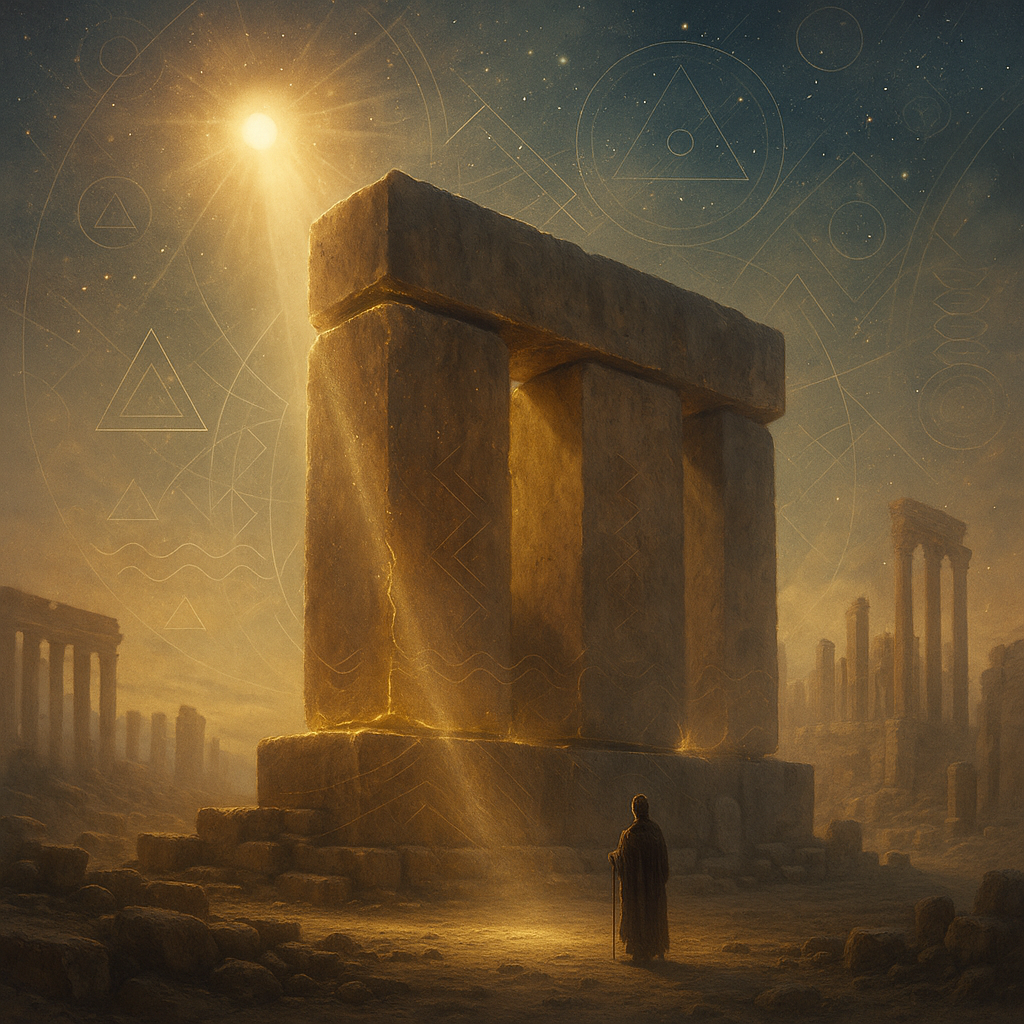
The greatest enigma of Baalbek is the Trilithon, a set of three colossal megalithic stones forming part of the Temple of Jupiter’s platform. Weighing between 800 and 1,000 tons each, these stones are among the largest ever used in construction anywhere on Earth. Their origin, purpose, and methods of transportation remain subjects of intense debate and fascination.
In esoteric and metaphysical traditions, Baalbek is viewed as a site of ancient power, celestial alignment, and lost technological wisdom—possibly predating known civilizations.
Spiritual and Cultural Significance
Solar and Celestial Worship
- Name “City of the Sun” reflects long-standing solar cults
- Temples dedicated to Baal, Jupiter, Venus, and Bacchus reflect cosmic reverence
Energetic and Geomantic Importance
- Built on a high plateau believed to be a power site or Earth energy node
- Legends describe Baalbek as a gateway or sacred landing point for gods
Mystery of Ancient Engineering
- Trilithon stones defy conventional historical explanations
- Sparks theories of pre-diluvian civilizations or advanced ancient technology
Historical and Archaeological Context
Multi-Layered Civilizations
Prehistoric Foundations
- Evidence of human occupation since at least the Neolithic period
- Some theorists suggest megalithic foundation predates Romans by millennia
Phoenician and Canaanite Period
- Worship of Baal and other sky gods
- Early temple structures may have stood on the platform
Roman Reconstruction (1st–3rd century CE)
- Built some of the largest temples in the Roman Empire
- Created monumental structures atop earlier foundations
- Incorporation of massive stones whose origins remain uncertain
Rediscovery and Research
Medieval and Early Modern Accounts
- Crusaders and travelers marveled at the stones’ enormity
- Arab historians spoke of “Giants” who built Baalbek
Modern Archaeology
- Roman contributions well documented
- Origins of the Trilithon and Megalithic Quarry remain debated
The Trilithon: Engineering and Mystery
Description of the Trilithon
The Three Massive Stones
- Located in the western retaining wall of the Temple of Jupiter platform
- Each stone approximately:
- 19.6 meters (64 ft) long
- 4.3 meters (14 ft) high
- 3.6 meters (12 ft) deep
- Estimated weight: 800–1,000+ tons
Positioned With Precision
- Fitted tightly and elevated about 20 feet above ground level
- Above them, smaller stones form additional layers
Additional Megalithic Wonders
The “Stone of the Pregnant Woman”
- Weighs over 1,000 tons
- Left in the quarry, likely intended for the platform
The “Forgotten Stone” and New Megaliths
- Recently discovered stone exceeds 1,600 tons, one of the largest ever carved
The Mystery: How Were the Stones Transported and Placed?
Conventional Explanations
Roman Engineering
- Romans were master builders and used cranes, rollers, and teams of workers
- However, largest known Roman cranes could lift only 100–200 tons
Earth Ramping Hypothesis
- Mounds of dirt may have been used to raise stones gradually
- Still does not explain transporting blocks weighing over 800 tons
Esoteric and Alternative Theories
Lost Ancient Civilization
- Suggests the platform predates the Romans by thousands of years
- Possibly constructed by a technologically advanced culture
Atlantean or Pre-Diluvian Influence
- Aligns with theories of global megalithic builders
- Parallels to sites like Göbekli Tepe, Puma Punku, and Giza
Anti-Gravitational or Acoustic Technologies
- Hypotheses include levitation, sound resonance, or vibrational tools
- Reflects ancient references to “gods lifting stones with sound”
Giant Builders of Myth
- Local traditions claim the stones were placed by giants
- Similar myths appear throughout the ancient world
Sacred and Cosmic Symbolism
1. Solar Alignment and Temple Orientation
Heliopolis: City of the Sun
- Temple aligned to solar rising points
- Represents worship of sky gods like Baal-Hadad, Jupiter, and solar deities
Energetic Resonance
- Massive stones believed to amplify geomagnetic or energetic fields
2. Temple of Jupiter
Symbol of Divine Authority
- One of the grandest temples in the Roman world
- Columns originally soared nearly 70 feet high
Cosmic Architecture
- Platform symbolizes a celestial foundation or “landing place” for gods
- Some mythologies describe Baalbek as a descent point for divine beings
3. Temple of Bacchus
Mystical Initiation Site
- Elaborate carvings of gods, vines, and cosmic symbols
- Suggests rites of fertility, transformation, and spiritual ascent
Esoteric and Metaphysical Interpretations
Energetic Power Site
Ley Lines and Geomancy
- Baalbek believed to be aligned with global energy grid
- Some claim it is an Earth chakra or energetic vortex
Ancient Astronomical Observatory
Celestial Tracking
- Platform may have been used to observe stars and planetary movements
- Massive stones serve as energetic stabilizers for astronomical structures
Interdimensional Gateway
Portal Myths
- Legends describe gods arriving from the sky
- Some esoteric traditions see Baalbek as a star-gate location
Influence on Later Cultures
Phoenician Spirituality
- Baal worship rooted in storm and solar deities
- Baalbek central to regional religion
Greco-Roman Religion
- Roman adaptation brought Jupiter, Bacchus, and Venus
- Combined local and imperial cosmology
Islamic and Medieval Traditions
- Islamic scholars referenced the site as built by giants or jinn
- Became part of mystical lore in Arabic writings
Cautions and Considerations
Archaeological vs. Esoteric Claims
- Archaeology confirms Roman construction above platform
- Origins of lower megalithic stones still unresolved
- Esoteric interpretations symbolic, not scientifically proven
Cultural Respect
- Baalbek is still used in local religious and cultural traditions
- Interpretations should honor heritage and regional history
Preservation
- The site needs ongoing protection from environmental and political factors
Key Associations
Energetic Correspondence
- Element: Earth / Fire
- Themes: Power, mystery, cosmic connection, divine architecture
Spiritual Archetypes
- Sun god
- Storm god
- Ancient master builders
- Gatekeepers or watchers
Baalbek and the Mystery of the Trilithon represent one of humanity’s greatest enigmas—a fusion of ancient engineering, cosmic symbolism, and spiritual significance. Whether viewed through the lens of archaeology, mythology, or metaphysical exploration, Baalbek stands as a monumental reminder of lost knowledge, sacred architecture, and the profound mysteries of our ancient past.