
Overview
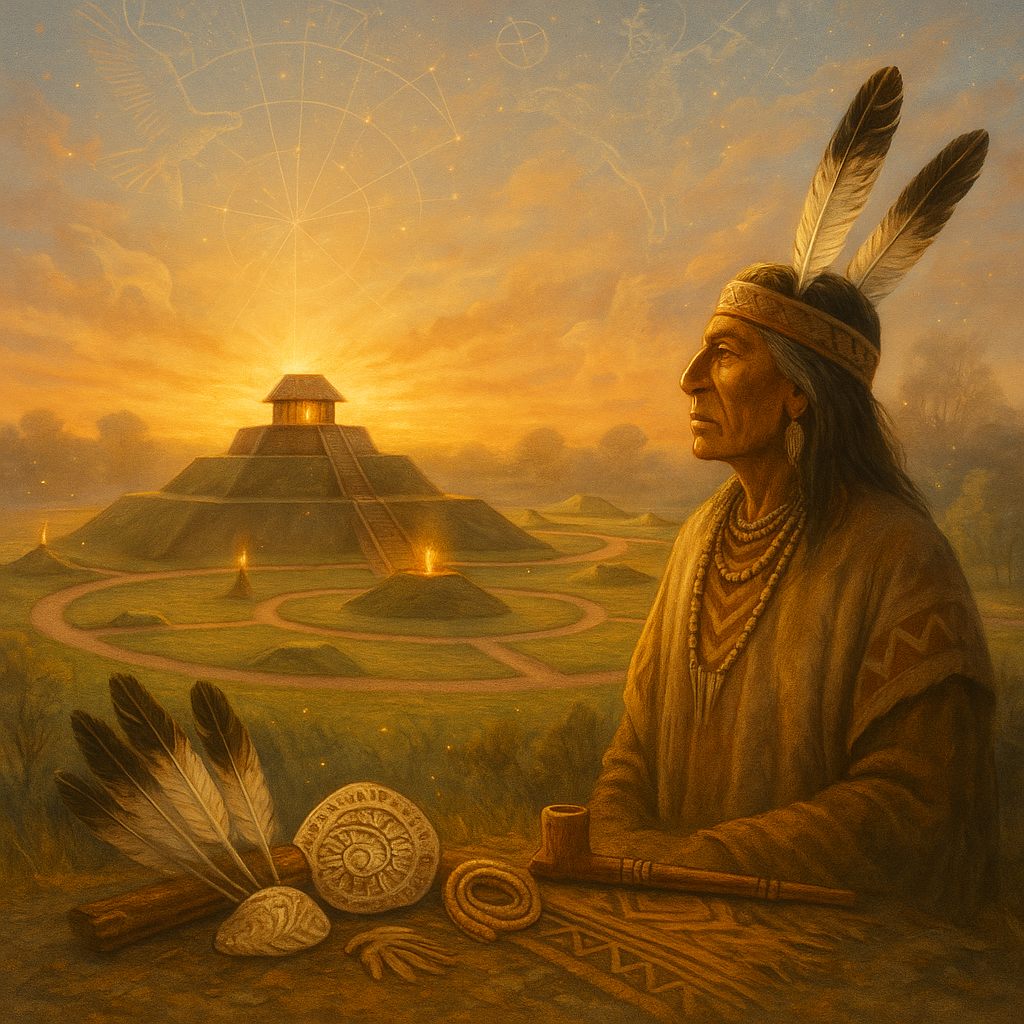
Cahokia was the largest and most complex pre-Columbian urban center north of Mexico, built by the Mississippian Mound Builders between 1050–1350 CE. Located near present-day St. Louis, Cahokia was a thriving metropolis of tens of thousands of people, filled with vast earthen pyramids, astronomical observatories, ceremonial plazas, and intricate social and spiritual systems.
The Mississippian culture that created Cahokia extended across much of eastern North America, connected through trade networks, shared cosmology, and mound-building traditions. While Cahokia was not a literate society in the classical sense, it left a powerful legacy of symbolic earthworks, spiritual architecture, sky-aligned structures, and ritual practices that reflect sophisticated astronomical knowledge and deep connection to the Earth.
In metaphysical and spiritual studies, Cahokia represents a sacred civilization rooted in earth energies, celestial cycles, communal ritual, and the harmonious integration of spiritual and ecological wisdom.
Spiritual and Cultural Significance
Sacred Earth Architecture
- Mounds served as temples, burial sites, ceremonial platforms, and cosmic markers
- Earthworks expressed cosmology through shape, orientation, and alignment
Celestial Awareness
- Structures aligned with solstices, equinoxes, and lunar cycles—revealing advanced sky knowledge
Social and Spiritual Integration
- Religion, governance, and community life intertwined
- Chiefs served as spiritual leaders who mediated between worlds
Historical and Archaeological Context
The Rise of Cahokia
Founding and Flourishing
- Reached its height between 1050–1200 CE
- Population estimated between 15,000–40,000
- Influenced by extensive trade networks from the Great Lakes to the Gulf of Mexico
The “Big Bang” Expansion
- Sudden population surge around 1050 CE
- Massive construction of plazas, mounds, woodhenges, and residential districts
- Indicates planned, intentional urban and ceremonial design
Decline and Transformation
Factors Suggested
- Climate shifts
- Resource pressures
- Social or political change
- Migration and regional decentralization
Legacy
- Cahokia’s influence spread through descendant cultures
- Many Indigenous nations preserve cosmologies reflecting Mississippian beliefs
Key Features of Cahokian Spiritual and Mystical Knowledge
1. Mound Architecture and Earth Energy
Monks Mound
- Largest earthen structure in the Americas north of Mexico
- Functioned as a ceremonial and political center
- Possibly symbolized the world mountain or cosmic axis
Platform and Conical Mounds
- Used for rituals, burials, and temple foundations
- Designed with symbolic shapes reflecting cosmology
Earth Medicine
- Mound construction follows sacred geometries and cardinal alignments
- Earth considered a living being; mounds as its ceremonial extensions
2. Woodhenge and Astronomical Alignments
Solar Calendar Structure
- Circular array of massive wooden posts
- Marked solstices, equinoxes, and seasonal transitions
Cosmological Purpose
- Used for agricultural timing, ceremonial planning, and spiritual alignment
- Demonstrates advanced understanding of solar movements
Ritual Use
- Possibly site for sunrise ceremonies, initiation rites, and communal gatherings
3. Three-Tiered Cosmos
Upper World
- Celestial beings, ancestors, and sky spirits
- Associated with birds, stars, and the sun
Middle World
- Human realm, Earth, daily life
- Represented by earthen mounds and plazas
Underworld
- Waters, fertility, transformation, and spirit beings
- Linked with serpents, underwater panthers, and renewal
This cosmology shaped architecture, symbols, and rituals.
4. Ritual and Ceremonial Practices
Fire Ceremonies
- Central hearths used in rituals of renewal and community bonding
Feasting and Offerings
- Ceremonial gatherings reinforced social harmony
- Offerings placed in mounds for spirits and ancestors
Burial Practices
- Carefully arranged burials with symbolic artifacts
- Indicates belief in afterlife, spirit journey, and cosmic rebirth
5. Sacred Symbols and Totemic Beings
Birdman or Falcon Warrior
- Symbol of solar power, transformation, and elite lineage
- Associated with leadership and spiritual authority
Serpents and Underworld Beings
- Represent balance between life, death, and regeneration
- Manifested in pottery, carvings, and mound iconography
Sun and Fire Symbols
- Emphasize life force, illumination, and cosmic order
Social and Spiritual Structure
Chiefdom-Based Society
Paramount Chiefs
- Combined political leadership with priestly duties
- Mediated between human community and spirit realms
Elite Compounds
- Organized around ceremonial plazas
- Connected to sacred rituals and cosmological symbolism
Communal Cohesion
Shared Ritual Cycles
- Agriculture, solstices, and important seasonal events
- Unified community through ceremonial participation
Trade and Spiritual Exchange
- Shells, copper, mica, and obsidian exchanged across vast distances
- Spread symbols, cosmology, and sacred art forms
Mystical and Esoteric Interpretations
Earth Energy and Ley Lines
- Mounds positioned along energetic pathways
- Believed to anchor spiritual energy or enhance ritual potency
Portal and Axis Concepts
- Monks Mound seen as a world center or axis mundi
- Woodhenge as a portal for sky earth communication
Ceremonial Consciousness
- Ritual gatherings may have involved trance, drumming, and rhythmic movement
- Used to connect with ancestors, nature spirits, and cosmic forces
Sacred Geometry
- Circular, square, and cardinal designs mirror cosmological order
- Reflect intentional harmony between human structures and divine pattern
Influence on Later Traditions
Descendant Indigenous Cultures
- Many Southeastern tribes (Choctaw, Chickasaw, Caddo, Natchez) retain Mississippian symbols
- Sun chief traditions
- Sacred fire rituals
- Cosmological stories mirroring ancient mound builder beliefs
Global Comparisons
- Similarities to pyramids, stone circles, and sacred landscapes worldwide
- Reinforces universal patterns of sky-earth ritual architecture
Modern Spiritual Reconnection
- Ceremonies held at Cahokia and other mounds today
- Growing interest in ancestral wisdom, earth spirituality, and sacred sites
Cautions and Considerations
Cultural Respect
- Cahokia is a sacred heritage of Indigenous peoples
- Interpretations should honor the living descendants and their traditions
Avoiding New Age Misappropriation
- Distinguish archaeological knowledge from speculative metaphysics
- Avoid claiming direct continuity without Indigenous validation
Preservation of Sacred Sites
- Many mounds destroyed by development
- Remaining sites must be approached with reverence
Key Associations
Energetic Correspondence
- Element: Earth / Sun
- Themes: Community, cosmic alignment, ancestral wisdom, earth harmony
Spiritual Archetypes
- Sun priests
- Earth mothers
- Birdman warriors
- Ancestral guardians
Cahokia and the Mississippian Mound Builders represent one of North America’s greatest spiritual civilizations—an advanced culture aligned with earth energies, celestial cycles, communal ritual, and sacred landscape design. Their legacy continues to inspire modern seekers who honor the deep wisdom encoded in mounds, symbols, and the enduring bond between humanity and the living Earth.