
Overview
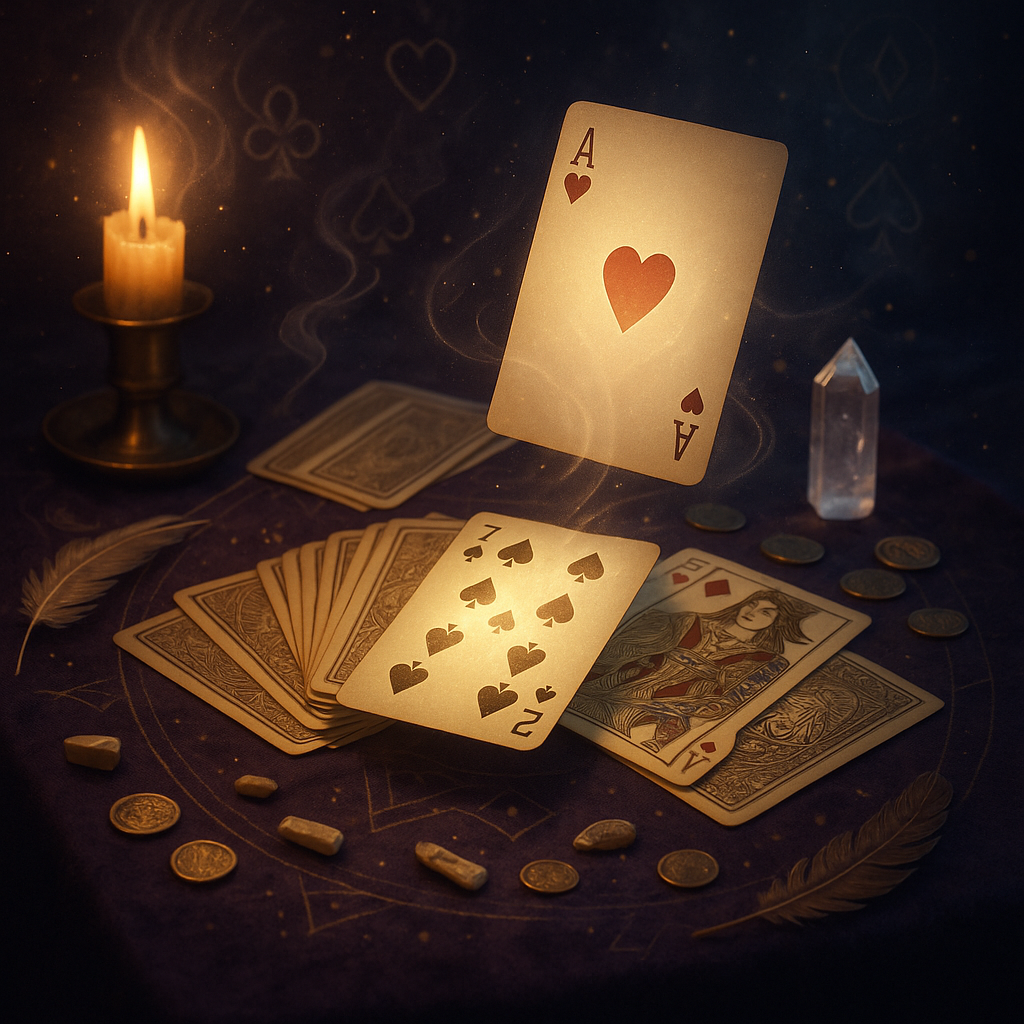
Cartomancy is the practice of using playing cards for divination, intuitive insight, and spiritual guidance. Long before tarot became widespread, ordinary playing cards were used to reveal hidden influences, future possibilities, and underlying energies in everyday life. Cartomancy blends symbolism, numerology, suits, intuition, and traditional meanings to form a versatile, accessible, and powerful method of divination.
Purpose of Cartomancy
Gaining Clarity and Guidance
- Provides insight into current situations, relationships, challenges, or decisions
- Reveals hidden dynamics and potential future outcomes
- Helps practitioners understand the energetic patterns around a question
Strengthening Intuition
- Encourages symbolic thinking and intuitive interpretation
- Helps readers develop psychic sensitivity and pattern recognition
- Offers a practical tool for daily guidance or deeper spiritual exploration
Exploring Symbolism in Simplicity
- Uses familiar, everyday tools to access complex spiritual messages
- Demonstrates that divination does not require elaborate systems
- Connects to historical and ancestral traditions of fortune-telling
Historical Background
Origins of Cartomancy
- Playing cards originated in China and spread through the Middle East to Europe
- By the 14th and 15th centuries, European readers used cards for fortune-telling
- Cartomancy became especially popular in France and England during the 18th and 19th centuries
Playing Cards and Tarot
- Tarot evolved from early playing card systems
- Many tarot interpretations trace back to cartomantic traditions
- Cartomancy remains simpler, faster, and more intuitive for many practitioners
Structure of the Playing Card Deck
The Four Suits and Their Meanings
- Hearts: emotions, relationships, intuition, love
- Diamonds: material life, finances, work, practicality
- Clubs: creativity, action, growth, communication
- Spades: challenges, truth, transformation, endings
Numbers and Their Symbolism
- Aces: beginnings, pure energy, potential
- 2–10: progress, development, movement, and life cycles
- Court cards: represent people, archetypes, or personality traits
- Jack: youth, ideas, messages
- Queen: intuition, emotion, maturity
- King: authority, mastery, leadership
Jokers
- Not always used, but can symbolize unexpected events, fate, or divine intervention
Methods of Cartomancy Reading
Single Card Draw
- Quick insight into the energy of the day or a simple question
- Useful for beginners or daily guidance
Three-Card Spread
- Common layout for:
- Past–present–future
- Situation–challenge–advice
- Mind–body–spirit
- Provides balanced, straightforward interpretation
Line or Row Spreads
- Cards laid in a row to show unfolding events
- Often used for timing or storytelling readings
Nine-Card Spread
- Offers detailed insight into complex situations
- Blends symbolism across relationships between surrounding cards
Full Deck Spreads
- Advanced technique using large layouts
- Reveals patterns across long-term cycles, life themes, or spiritual journeys
Interpretation Techniques
Suit Interactions
- Multiple cards from the same suit amplify that area of life
- Mixed suits indicate varied influences and emotional complexity
Numerical Patterns
- Repeating numbers highlight themes (e.g., multiple 7s indicate spiritual lessons)
- Sequential numbers show progression or movement
Court Card Dynamics
- Court cards interacting with one another may reflect relationships or conflicts
- Their placement can indicate influence, timing, or emotional tone
Intuitive and Contextual Reading
- Feelings, impressions, and imagery contribute to interpretation
- The reader’s intuition guides nuance beyond traditional meanings
- Context of the question shapes the message
Spiritual and Esoteric Perspectives
Everyday Objects as Sacred Tools
- Playing cards become vessels of symbolic or spiritual communication
- Shows divine guidance available in everyday life
Archetypes and Energetics
- Suits reflect elemental energies:
- Hearts (Water), Diamonds (Earth), Clubs (Fire), Spades (Air)
- Court cards represent archetypal forces interacting through the reading
The Reader as Interpreter
- Diviner translates symbolic language into meaningful guidance
- Messages arise through synchronicity and energetic alignment
Ethical Considerations
Personal Responsibility
- Cartomancy offers guidance, not absolute predictions
- Seekers should combine insight with free will and discernment
Emotional Support and Respect
- Deliver messages with clarity and compassion
- Avoid fear-based interpretations or deterministic claims
Integrity in Practice
- Maintain sacred boundaries and treat cards as spiritual tools
- Use readings to empower, not control or pressure others
Care and Maintenance of Playing Cards
Cleansing and Charging
- Cleanse with smoke, light, intention, or moonlight
- Charge cards on an altar or with crystals like selenite or clear quartz
Respectful Storage
- Keep the deck in a pouch, box, or cloth
- Store with intention and care to maintain energetic clarity
Building a Relationship
- Regular use strengthens the reader–deck connection
- Cards become attuned to the user’s energy over time
Key Symbols and Associations
Spiritual Symbolism
- Hearts: compassion, emotional truth, spiritual connection
- Diamonds: grounded prosperity, material insight
- Clubs: inspiration, ideas, growth, creativity
- Spades: spiritual trials, transformation, wisdom
- Joker: divine unpredictability and fate
- Red vs. black suits: balance of active and receptive energies
Cartomancy transforms an ordinary deck of playing cards into a powerful divinatory tool, offering guidance through symbolism, intuition, and ancestral tradition. Flexible, accessible, and profound, it remains a beloved practice for seekers who value clarity, simplicity, and the subtle art of reading life through signs and patterns.