
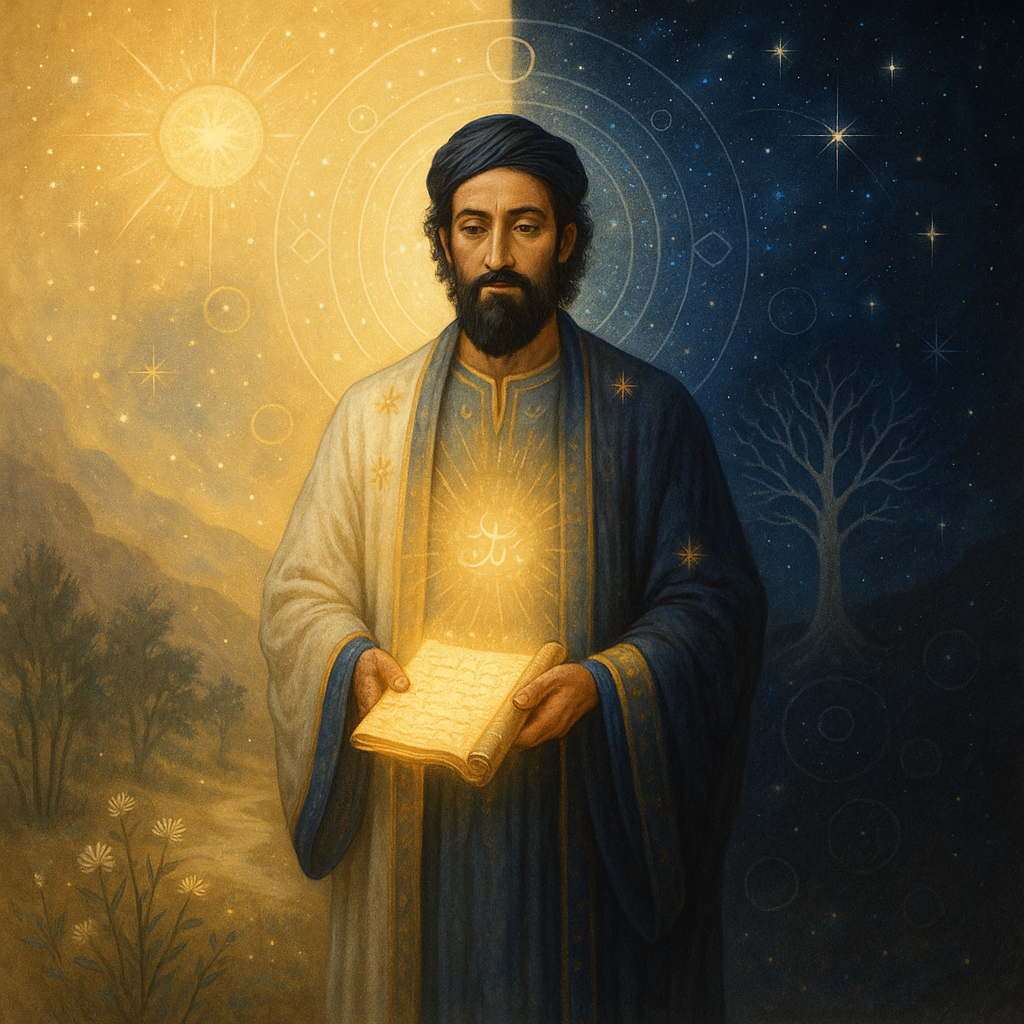
Overview
Mani (216–276 CE) was a Persian prophet, teacher, and spiritual reformer who founded Manichaeism—an influential, dualistic religious tradition once spread across the Roman Empire, Persia, Central Asia, and China. He sought to unify spiritual truths from Christianity, Zoroastrianism, Buddhism, and Gnostic traditions into a universal religion centered on enlightenment, ethical living, and liberation from darkness.
Historical Background
Birth and Early Life
- Born near Seleucia-Ctesiphon in the Sasanian Empire (modern-day Iraq)
- Raised within a Jewish-Christian baptist sect known as the Elcesaites
- Experienced early visions calling him to spiritual mission
- Developed a lifelong belief that he was chosen to deliver a final, universal revelation
Prophetic Calling
- Reported visionary encounters with a celestial guide, the “Twin” or “Syzygos”
- Declared himself the successor to earlier prophets including Jesus, Buddha, and Zoroaster
- Presented his teachings as the culmination of humanity’s spiritual evolution
Core Teachings and Philosophy
Cosmic Dualism
- Reality consists of two eternal forces: Light (spirit) and Darkness (matter)
- Human beings contain fragments of divine light trapped in physical form
- Spiritual life is the struggle to free light and restore cosmic harmony
Salvation Through Knowledge
- Liberation comes from gnosis—inner awareness of one’s divine origin
- Ethical behavior, discipline, and compassion help release spiritual light
- Spiritual insight leads to union with the Realm of Light
Ethical Principles
- Nonviolence, purity, humility, and generosity
- Respect for all living beings due to the presence of divine light
- Disciplined lifestyle for spiritual clarity and moral responsibility
Scriptures and Writings
Canon of Mani
Mani authored numerous texts, originally in Syriac and Middle Persian:
- The Living Gospel
- The Shabuhragan (written for King Shapur I)
- The Treasure of Life
- The Book of Giants
- Collections of letters, psalms, hymns, and artistic works
Visual Teaching
- Created illustrated manuscripts called the Arzhang
- Used imagery to teach across cultures and literacy levels
Expansion of Manichaeism
Global Spread
- Supported initially by Persian King Shapur I
- Spread rapidly through missionaries across the Roman Empire, Arabia, Africa, and Asia
- Reached China along the Silk Road, influencing art and spirituality for centuries
Universality of Message
- Adapted teachings to local cultures and languages
- Positioned Mani as the final prophet in a global spiritual lineage
Persecution and Decline
Opposition from Empires and Religious Authorities
- Viewed as a threat by Zoroastrian, Roman, and later Christian leaders
- Mani imprisoned and executed under Bahram I
- Followers faced centuries of suppression, forced conversions, and destruction of texts
Survival and Legacy
- Teachings persisted underground and resurfaced in medieval Europe
- Influenced Bogomils, Cathars, Gnostics, and esoteric traditions
Metaphysical and Esoteric Interpretations
Symbolism of Light and Darkness
- Interpreted as psychological, spiritual, or energetic forces
- Seen as metaphor for consciousness, ego, illusion, and awakening
Inner Liberation
- Humanity’s purpose is to awaken, heal, and liberate the divine spark within
- Self-awareness, compassion, and moral choices elevate the world
Legacy and Cultural Significance
Intellectual and Spiritual Influence
- Sparked theological debates in early Christianity and Islam
- Inspired mystical, artistic, and philosophical traditions
- Contributed to global Gnostic and dualistic worldviews
Modern Relevance
- Invites reflection on moral responsibility, polarity, and spiritual identity
- Encourages unity among global religious traditions
Key Symbols and Associations
Spiritual Symbolism
- Light vs. Darkness: cosmic struggle and human transformation
- The Twin (Syzygos): higher self, divine guidance
- The Tree of Life: growth, healing, cosmic restoration
- Radiant orb or star: fragments of divine light within all beings
Mani remains a profound figure of spiritual synthesis—an advocate of universal wisdom, compassion, and inner illumination. His teachings challenge humanity to recognize its divine origin and contribute to the restoration of light within the world.