
Overview
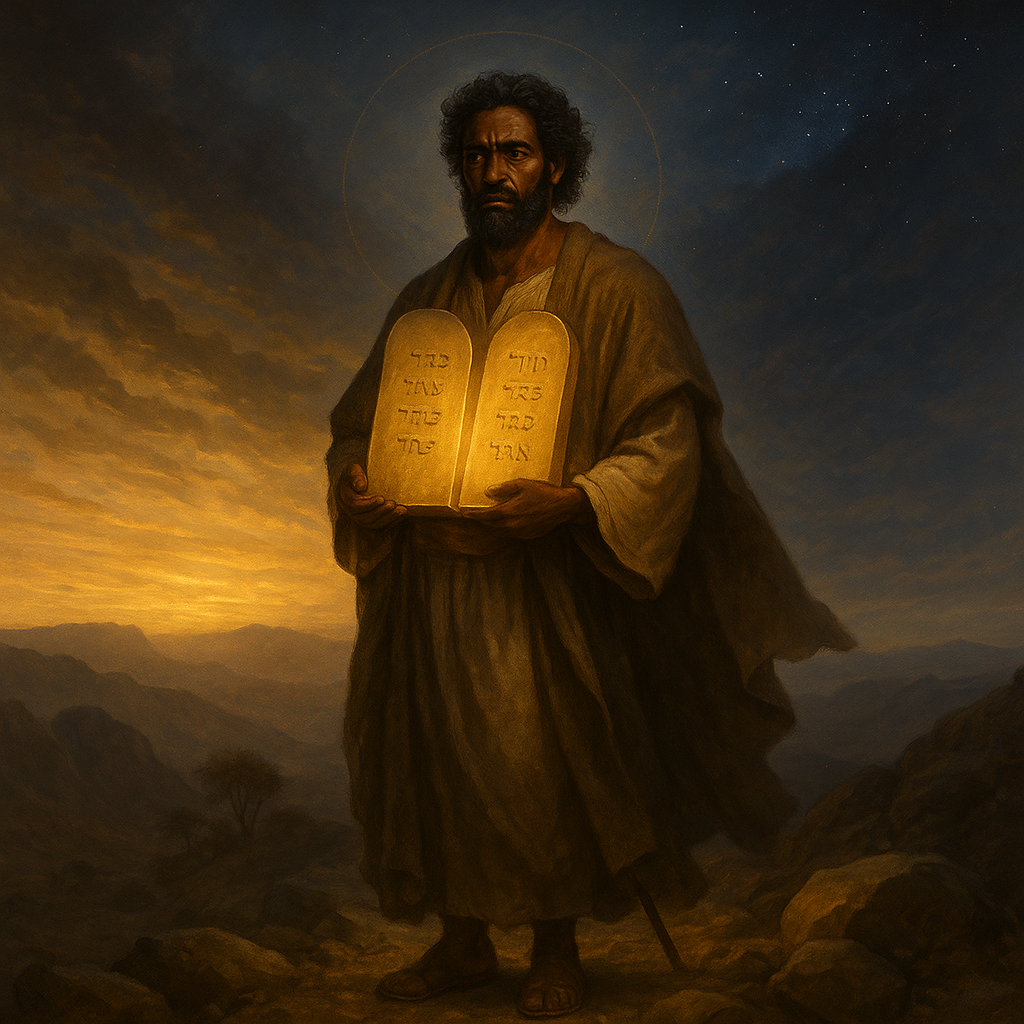
Moses is one of history’s most influential religious figures, revered in Judaism, Christianity, and Islam as a prophet, liberator, and spiritual guide. Traditionally dated to the 13th–14th century BCE, he is credited with leading the Israelites out of Egyptian bondage, receiving divine law, and establishing the covenantal relationship between God and His people. His life embodies faith, moral responsibility, and transformative leadership.
Historical Background
Birth and Early Life
- Born to Hebrew parents during a period of oppression in Egypt
- Hidden as an infant and raised in Pharaoh’s household
- Experienced both Egyptian royal culture and Hebrew identity
Exile and Calling
- Fled to Midian after witnessing injustice
- Lived as a shepherd and married into a local family
- Received a divine calling through the burning bush—an encounter with God commanding him to free the Israelites
The Exodus
- Returned to Egypt to confront Pharaoh
- Led the Israelites out of slavery after a series of plagues
- Became central figure in the journey toward spiritual and national liberation
Spiritual Mission and Leadership
Covenant at Mount Sinai
- Received the Ten Commandments and the Torah
- Established ethical, ritual, and communal laws
- Formed a sacred covenant between God and the Israelite people
Guiding the Community
- Led a diverse and often struggling population through the wilderness
- Acted as mediator, teacher, judge, and intercessor
- Implemented social, moral, and religious structures for communal life
Teachings and Core Principles
Monotheism and Divine Relationship
- Affirmed belief in one God who is personal, just, and compassionate
- Emphasized obedience, trust, gratitude, and reverence
Law, Ethics, and Justice
- Morality rooted in dignity, responsibility, and compassion
- Prohibitions against murder, theft, deception, exploitation, and idolatry
- Encouraged care for strangers, the poor, and the oppressed
Freedom and Spiritual Responsibility
- Liberation from oppression as both physical and inner transformation
- True freedom involves discipline, conscience, and moral purpose
Sacred Texts and Tradition
The Torah
- First five books of the Hebrew Bible traditionally attributed to Moses
- Contains history, law, theology, poetry, and spiritual instruction
Oral and Interpretive Traditions
- Expanded by rabbinic commentary, scholarship, and cultural memory
- Preserved as foundational scripture in multiple faiths
Influence and Legacy
Judaism
- Considered the greatest prophet and foundational lawgiver
- Central figure in Passover, liturgy, and cultural identity
Christianity and Islam
- Honored as a prophet, spiritual guide, and precursor to later revelations
- Stories of Moses inform theology, ethics, and spiritual reflection
Western Civilization
- Inspired legal systems, social justice movements, literature, and art
- Symbol of moral authority, liberation, and principled leadership
Metaphysical and Esoteric Interpretations
Archetype of the Spiritual Seeker
- Represents the soul’s journey from bondage to awakening
- The wilderness symbolizes inner transformation and purification
The Burning Bush and Divine Presence
- Symbol of revelation, calling, and sacred communication
- Suggests that the divine exists within and around everyday reality
Tablets of Law as Inner Wisdom
- Moral law reflects universal spiritual order
- Eternal truths inscribed not only on stone, but within the human heart
Key Symbols and Associations
Spiritual Symbolism
- The Burning Bush: divine revelation and guidance
- The Ten Commandments: ethical foundation and sacred law
- The Staff: leadership, faith, and divine empowerment
- The Parted Sea: liberation, courage, and miraculous transformation
Moses remains a powerful symbol of justice, faith, humility, and spiritual responsibility. His life story continues to inspire individuals and societies to seek freedom, uphold moral integrity, and walk with courage toward a more compassionate and sacred world.