
Overview
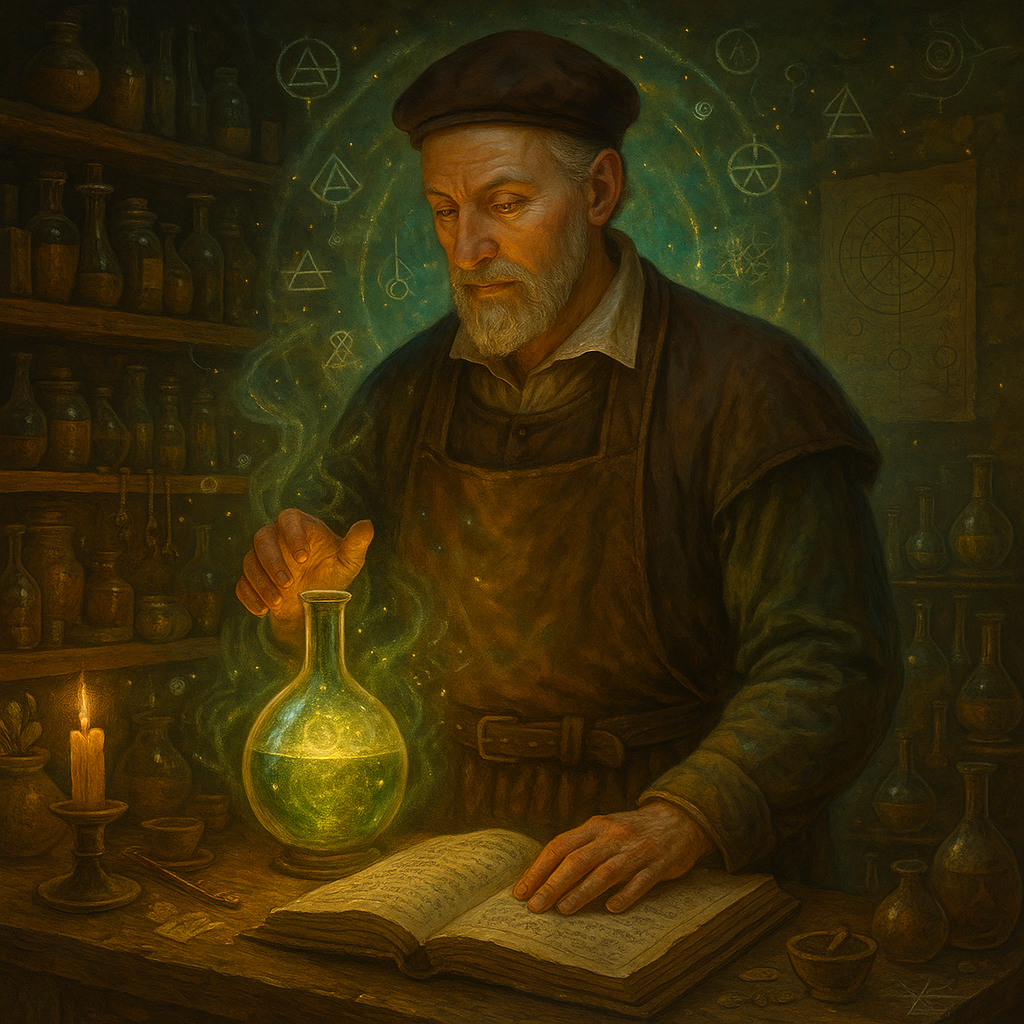
Paracelsus (1493–1541), born Theophrastus Philippus Aureolus Bombastus von Hohenheim, was a Swiss-German physician, alchemist, astrologer, and philosopher who revolutionized Western medicine. Rejecting traditional academic dogma, he emphasized observation, experimentation, and the spiritual nature of healing. Known as the “Father of Toxicology,” he bridged mystical alchemy and emerging medical science, inspiring future generations of healers, herbalists, and metaphysical thinkers.
Historical Background
Early Life and Education
- Born in Einsiedeln, Switzerland, to a physician and herbalist father
- Traveled extensively across Europe studying folk medicine, mining, chemistry, and metallurgy
- Exposed to diverse healing traditions beyond university teachings
Professional Career
- Practiced as a physician, surgeon, and medical reformer
- Taught at the University of Basel, challenging established medical authorities
- Advocated for accessible medicine rooted in nature and patient experience
Scientific and Medical Contributions
Medical Innovation
- Rejected Galenic humoral theory dominating medieval medicine
- Introduced chemical remedies, minerals, and dosage-based treatment
- Insisted that illness had natural—not supernatural—causes
Foundation of Toxicology
- Famously stated, “The dose makes the poison,” recognizing dosage as central to safety
- Studied the effects of substances on the human body
- Helped establish chemistry as essential to medicine
Holistic Healing Approach
- Viewed body, mind, and spirit as interconnected
- Believed disease reflects imbalance within the whole self
- Encouraged individualized treatment rather than universal prescriptions
Alchemy, Philosophy, and Metaphysics
Spiritual Alchemy
- Saw alchemy not only as metal transmutation, but inner transformation
- Believed healing involved awakening divine life force within matter and humanity
Doctrine of Signatures
- Plants and natural forms were imprinted with symbolic clues to their healing uses
- Nature serves as a teaching text for attentive healers
Microcosm and Macrocosm
- Humans are reflections of the cosmos
- Understanding universal forces aids medical and spiritual insight
Writings and Legacy
Major Works
- Paragranum – principles of medical reform
- Opus Paramirum – theories on disease and healing
- Numerous alchemical, medical, and philosophical texts
- Writings circulated widely after his death, shaping Renaissance thought
Influence on Medicine and Esotericism
- Inspired homeopathy, naturopathy, and integrative medicine
- Revered within Rosicrucian, Hermetic, and alchemical traditions
- Influenced psychology, especially Jungian symbolism and archetypes
Cultural Impact
- Challenged academic elitism, advocating healing for all people
- Became a symbol of medical rebellion, curiosity, and intuitive wisdom
Metaphysical and Esoteric Perspectives
Healing as Sacred Work
- The physician acts in partnership with divine and natural forces
- Illness may guide spiritual growth, not merely physical suffering
Nature as Living Intelligence
- The natural world contains hidden wisdom, energy, and purpose
- Healing requires reverence, attention, and spiritual humility
Key Symbols and Associations
Spiritual Symbolism
- Alchemy flask or furnace: transformation, purification, experimentation
- Herbs and minerals: nature’s medicine and encoded wisdom
- Solar and planetary symbols: cosmic forces influencing health
- Caduceus or healing staff: integration of science and spirit
Paracelsus remains a vital figure in both medicine and mysticism—reminding humanity that healing is not merely technical, but deeply intuitive, natural, and sacred. His legacy encourages seekers to unite observation, compassion, and spiritual insight in the pursuit of true well-being.