
Overview
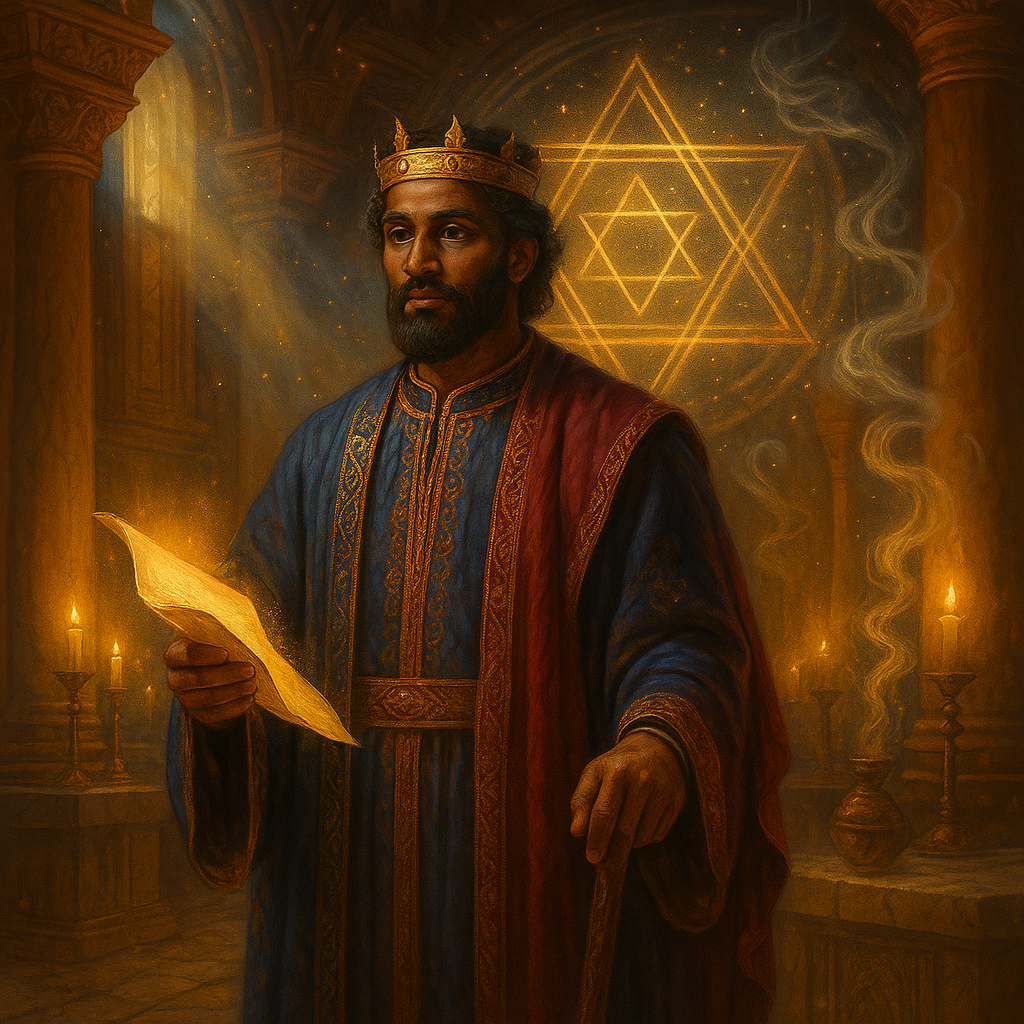
King Solomon, traditionally dated to the 10th century BCE, was the third ruler of the united Kingdom of Israel and is revered across Judaism, Christianity, and Islam as a symbol of wisdom, justice, divine favor, and spiritual insight. Remembered for building the First Temple in Jerusalem, composing sacred texts, and demonstrating extraordinary discernment, Solomon also became a central figure in mystical, magical, and esoteric traditions throughout history.
Historical Background
Royal Lineage and Rise to Power
- Son of King David and Bathsheba
- Chosen to succeed David despite not being the eldest son
- United Israel during a time of peace, prosperity, and cultural development
The Golden Age of Israel
- Expanded trade, diplomacy, and architecture
- Renowned for administrative organization, wealth, and international alliances
- Oversaw the construction of the First Temple, establishing Jerusalem as a spiritual center
Wisdom, Writings, and Teachings
Divine Gift of Wisdom
- According to scripture, God granted Solomon unparalleled wisdom after he humbly requested discernment rather than power or riches
- Famous judgment involving two women and a disputed child exemplifies his clarity and compassion
Biblical Texts Attributed to Solomon
- Proverbs — practical spiritual and ethical wisdom
- Ecclesiastes — reflections on impermanence and the search for meaning
- Song of Songs — poetic celebration of love, union, and divine intimacy
- Later tradition associates him with other writings and mystical teachings
Spiritual and Esoteric Dimensions
Solomon in Mystical Traditions
- Viewed as a sage possessing deep knowledge of creation, angels, spirits, and cosmic law
- Central figure in Jewish Kabbalah, where his wisdom symbolizes inner illumination
- Appears in Christian mysticism, Islamic Sufism, and occult philosophy
The Seal of Solomon
- Six-pointed star or interlaced triangles symbolizing harmony of opposites
- Represents divine authority, protection, spiritual union, and mastery of inner and outer realms
- Used in esoteric traditions, talismans, meditation, and sacred geometry
Solomonic Magic and Legends
- Medieval grimoires, such as The Key of Solomon, describe ritual magic attributed to him
- Viewed symbolically as mastery over the subconscious, shadow, and spiritual forces
- Stories of commanding spirits emphasize spiritual authority, discipline, and responsibility
Ethical and Philosophical Contributions
Core Themes of Solomonic Wisdom
- True power arises from humility, compassion, and understanding
- Wealth, achievement, and pleasure are temporary without inner purpose
- Wisdom requires listening, reflection, and moral accountability
- Everything in life unfolds in divine timing and natural cycles
Leadership and Justice
- Ideal ruler acts as servant of the people
- Justice tempered with empathy sustains society
- Wisdom is lived through ethical action, not intellectual prestige
Decline, Legacy, and Reflection
Later Reign and Human Complexity
- Accounts describe political strain, foreign alliances, and spiritual compromise
- Stories of Solomon’s flaws underscore the imperfection of human leaders
- His life illustrates the balance between spiritual gifts and worldly challenges
Historical and Cultural Influence
- Revered as a prophet in Islam, a saintly king in Christianity, and a foundational figure in Judaism
- Inspired art, literature, music, architecture, and spiritual scholarship for centuries
- Continues to serve as archetype of enlightened leadership
Metaphysical and Symbolic Interpretations
Archetype of the Inner Sage
- Represents the awakened heart guided by divine intuition
- Embodies integration of intellect, spirit, and ethical action
Builder of the Inner Temple
- The Temple symbolizes the soul, spiritual development, and sacred inner space
- Spiritual practice becomes a form of inner architecture—constructing wisdom, purity, and alignment with the Divine
Key Symbols and Associations
Spiritual Symbolism
- Seal of Solomon: unity of spirit and matter, protection, balance
- Temple of Jerusalem: sacred center, divine presence, inner sanctuary
- Throne or scepter: wisdom-based authority and righteous leadership
- Open scroll: knowledge, prophecy, and universal teachings
Solomon endures as a timeless figure of wisdom, spiritual aspiration, and human complexity. His legacy invites seekers to pursue discernment, humility, and inner truth—building a temple of compassion and clarity within the heart and the world.