
Overview
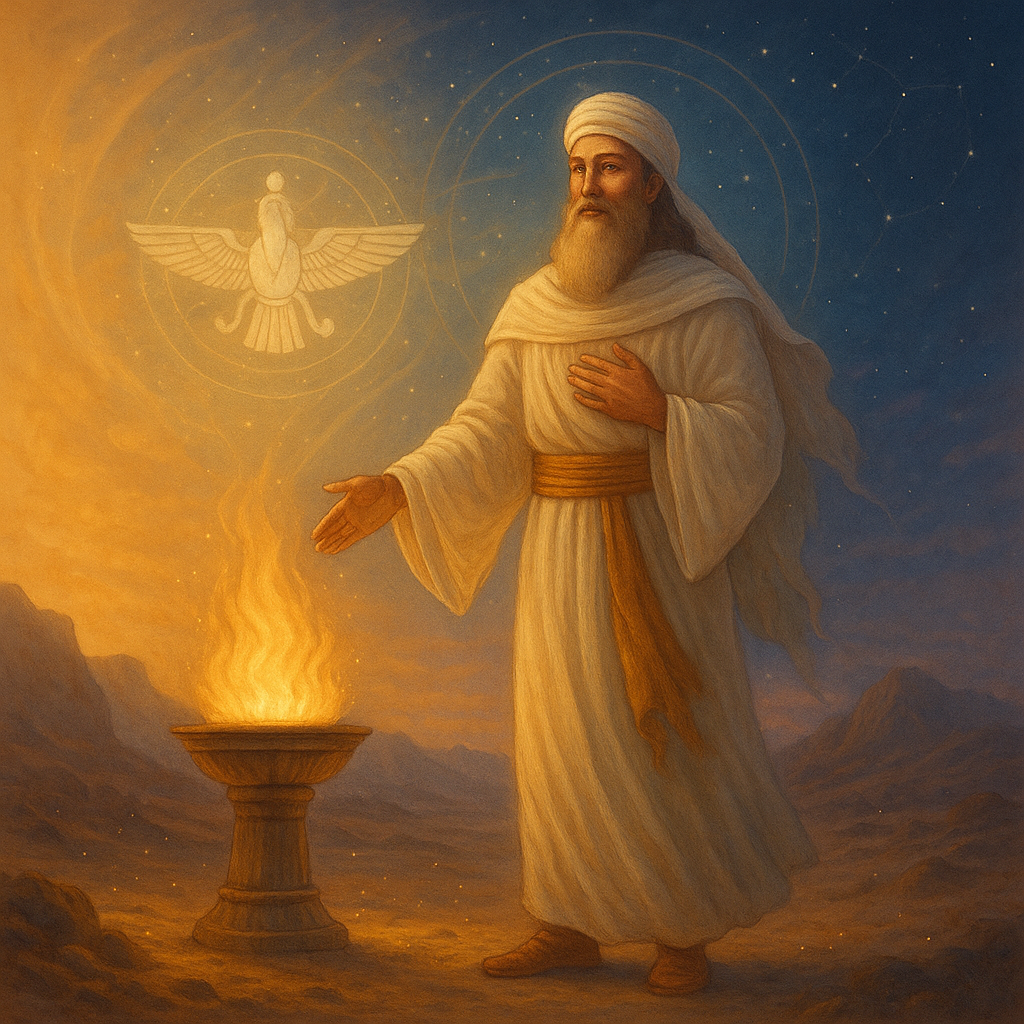
Zoroaster, also known as Zarathustra, was an ancient Persian prophet and spiritual reformer who founded Zoroastrianism—one of the world’s oldest monotheistic religions. Traditionally dated between 1500 and 1000 BCE (though estimates vary), he taught a cosmic dualism between truth and falsehood, encouraging humanity to choose righteousness, compassion, and conscious moral responsibility. His teachings profoundly influenced Judaism, Christianity, Islam, and later philosophical thought.
Historical Background
Life and Cultural Context
- Born in ancient Persia, likely in northeast Iran or Central Asia
- Lived during a time of polytheistic worship and ritual sacrifice
- Trained as a priest before receiving divine revelations
Divine Calling
- Experienced a vision of Vohu Manah—the “Good Mind”
- Received teachings from Ahura Mazda, the Wise Lord
- Became a wandering prophet advocating spiritual and ethical reform
Core Teachings and Cosmology
Ahura Mazda – The Supreme God
- Source of light, goodness, wisdom, and creation
- Guides humanity through divine attributes known as the Amesha Spentas
Duality of Existence
- Cosmic struggle between:
- Asha (Truth, Order, Justice)
- Druj (Falsehood, Chaos, Evil)
- Human beings participate in shaping the outcome through free will
Ethical Responsibility
- Humanity is called to defend truth, protect life, and cultivate integrity
- Moral choices influence both earthly life and cosmic destiny
The Threefold Path
Good Thoughts (Humata)
- Clarity, honesty, and conscious intention
Good Words (Hukhta)
- Truthful, compassionate speech
Good Deeds (Hvarshta)
- Ethical action benefiting others and the world
This triad forms the foundation of Zoroastrian spiritual practice.
Scriptures and Sacred Tradition
The Avesta
- Primary collection of Zoroastrian sacred texts
- Includes liturgy, hymns, prayers, and ritual guidance
The Gathas
- Oldest portion of the Avesta, attributed to Zoroaster himself
- Poetic philosophical verses expressing devotion, cosmic insight, and moral purpose
Metaphysical and Spiritual Themes
Free Will and Moral Agency
- Humans choose between constructive and destructive forces
- Spiritual progress is achieved through conscious discernment
Purity and Sacred Fire
- Fire symbolizes divine presence, illumination, and spiritual aspiration
- Temples maintain eternal flames as reminders of inner and cosmic light
Afterlife and Judgment
- The soul crosses the Chinvat Bridge after death
- Righteous individuals enter paradise; wrongdoers face purification
- Final restoration envisioned when good ultimately triumphs
Influence and Legacy
Impact on World Religions
- Concepts of heaven, hell, angels, judgment, resurrection, and messianism influenced Abrahamic traditions
- Inspired philosophical, mystical, and ethical systems across cultures
Cultural Significance
- Zoroastrianism shaped Persian identity, literature, kingship, and law
- Revered by ancient empires including the Achaemenids and Sasanians
Modern Presence
- Practiced today by Zoroastrian communities, including Parsis in India and groups in Iran and the diaspora
- Celebrated for ecological reverence, social ethics, and spiritual clarity
Esoteric and Philosophical Interpretations
Symbol of Inner Duality
- Represents the psychological struggle between higher consciousness and ego
- Encourages integration, balance, and awakened moral awareness
Universal Battle for Harmony
- Cosmic dualism interpreted as metaphor for spiritual evolution
- Good prevails not through violence, but through wisdom and compassion
Key Symbols and Associations
Spiritual Symbolism
- Faravahar: soul’s journey, moral freedom, divine guidance
- Sacred Fire: purity, truth, enlightenment
- Winged disc or flame: cosmic order and conscious action
- Asha: harmony with divine law and universal truth
Zoroaster remains a monumental spiritual figure—calling humanity to participate in cosmic goodness through intentional thought, compassionate speech, and ethical action. His message continues to inspire seekers toward justice, clarity, and harmonious living in a world of moral choice.