
Overview
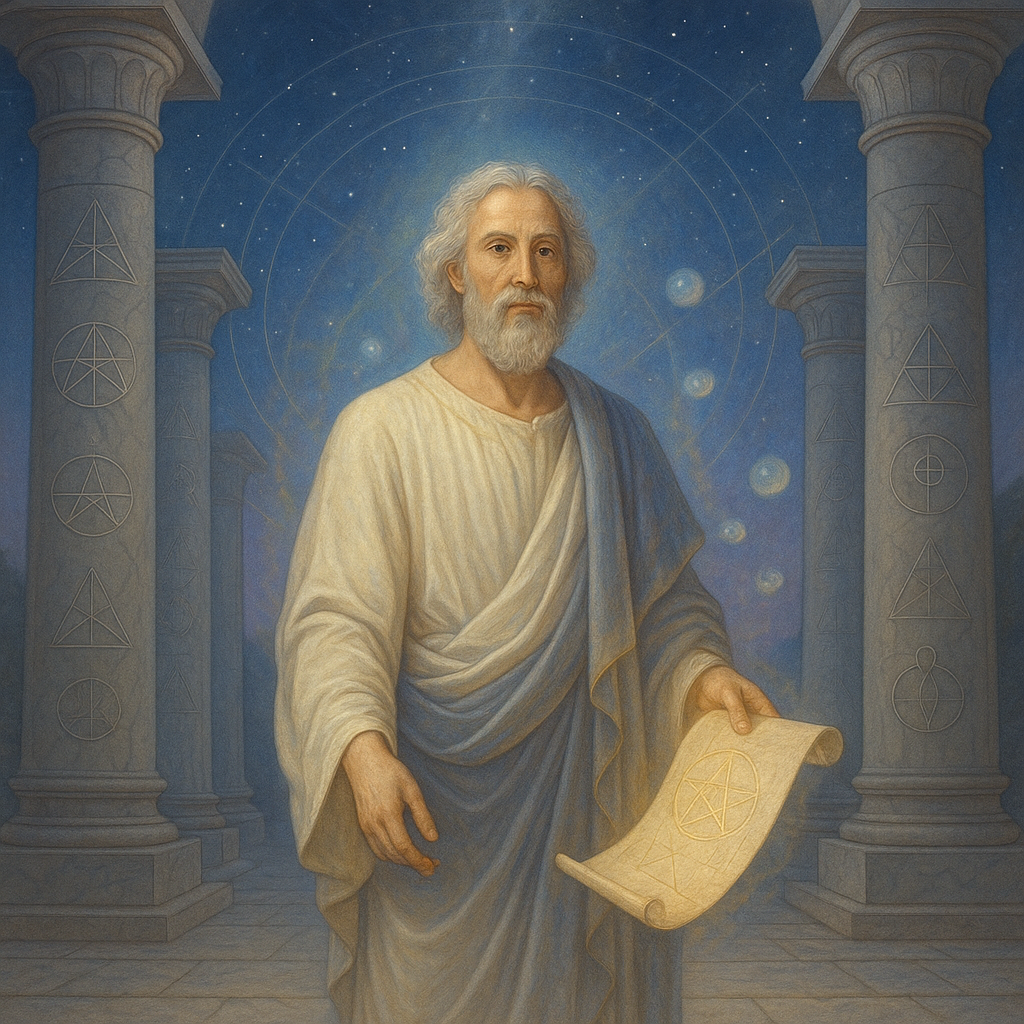
Apollonius of Tyana (circa 15–100 CE) was a Greek Neopythagorean philosopher, teacher, and mystic whose life blended rigorous spiritual discipline, ethical reform, and reputed supernatural abilities. Revered in antiquity as a holy man and miracle worker, he traveled widely to seek wisdom, observing spiritual traditions across the Mediterranean, Middle East, and India. His teachings emphasized purity, virtue, nonviolence, and living in harmony with the divine order of the cosmos.
Historical Background
Birth and Early Life
- Born in Tyana in Cappadocia (modern-day Turkey)
- Raised in a wealthy family, receiving classical Greek education
- Influenced early by Pythagorean philosophy and ascetic practices
Philosophical Training
- Adopted Pythagoras’ principles of spiritual discipline
- Pursued mathematics, ethics, metaphysics, and sacred knowledge
- Renounced luxury to live a life of simplicity and contemplation
Travels and Teachings
Pilgrimage for Wisdom
Apollonius traveled extensively, seeking truth beyond cultural boundaries:
- Journeyed through Syria, Egypt, Mesopotamia, Persia, and India
- Met priests, sages, magi, and philosophers
- Studied comparative religion, mysticism, and natural philosophy
Purpose of His Journeys
- To learn universal spiritual truths shared across civilizations
- To refine moral character and deepen inner clarity
- To encourage peace, compassion, and ethical governance
Philosophy and Beliefs
Core Spiritual Principles
- The universe is governed by divine intelligence and harmony
- Humans must align with cosmic order through virtue and discipline
- Knowledge without ethics leads to imbalance
- True wisdom arises from silence, observation, and inner purity
Pythagorean Influence
- Vegetarianism and respect for all living beings
- Rejection of animal sacrifice
- Belief in the immortality and reincarnation of the soul
- Sacred geometry and numerical symbolism as keys to creation
Miracles, Mysticism, and Reputation
Accounts of Supernatural Abilities
Ancient sources attribute extraordinary abilities to Apollonius:
- Healing illness and restoring balance
- Clairvoyance and telepathy
- Apparitions, bilocation, and prophecy
- Calming unrest and influencing natural forces
Skepticism and Debate
- Some historians view these stories as symbolic or exaggerated
- Supporters argue they reflect genuine spiritual mastery
- His reputation shaped both veneration and controversy
Political and Social Influence
Counsel to Leaders
- Advised rulers to govern with justice, humility, and compassion
- Criticized tyranny, greed, and corruption
- Advocated nonviolent solutions to conflict
Trials and Accusations
- Faced charges of sorcery and political threat
- Ultimately acquitted—strengthening his mystical reputation
Comparison to Jesus
Parallel Traditions
Later writers—especially Philostratus—drew comparisons between Apollonius and Jesus due to:
- Miracle stories
- Moral teachings
- Disciples and written accounts
- Emphasis on compassion and divine unity
These comparisons fueled religious, philosophical, and political debates throughout history, though no direct connection is verified.
Esoteric and Metaphysical Interpretations
Spiritual Symbolism
Apollonius is revered in occult, theosophical, and mystical circles as:
- An ascended master or enlightened sage
- A spiritual bridge between East and West
- A guardian of ancient wisdom and universal ethics
Modern Metaphysical Interest
- Seen as proof of timeless, cross-cultural spiritual truth
- Represents the pursuit of inner mastery and conscious evolution
Legacy and Cultural Impact
Historical Significance
- Preserved and revitalized Pythagorean philosophy
- Demonstrated philosophical spirituality in action
- Influenced early Christian, pagan, and esoteric thought
Continued Inspiration
Apollonius remains a symbol of:
- Moral courage guided by spiritual values
- Wisdom gained through global exploration
- The fusion of rational inquiry and mystical experience
Key Symbols and Associations
Spiritual Symbolism
- The Pythagorean tetractys—harmony of creation
- The staff or walking stick—pilgrimage for truth
- White garments—purity, discipline, devotion
- The lotus or rising sun—awakening of consciousness
Apollonius of Tyana endures as one of antiquity’s most intriguing spiritual figures—a philosopher-sage whose life invites reflection on virtue, inner transformation, and the universal quest for wisdom.