
Overview
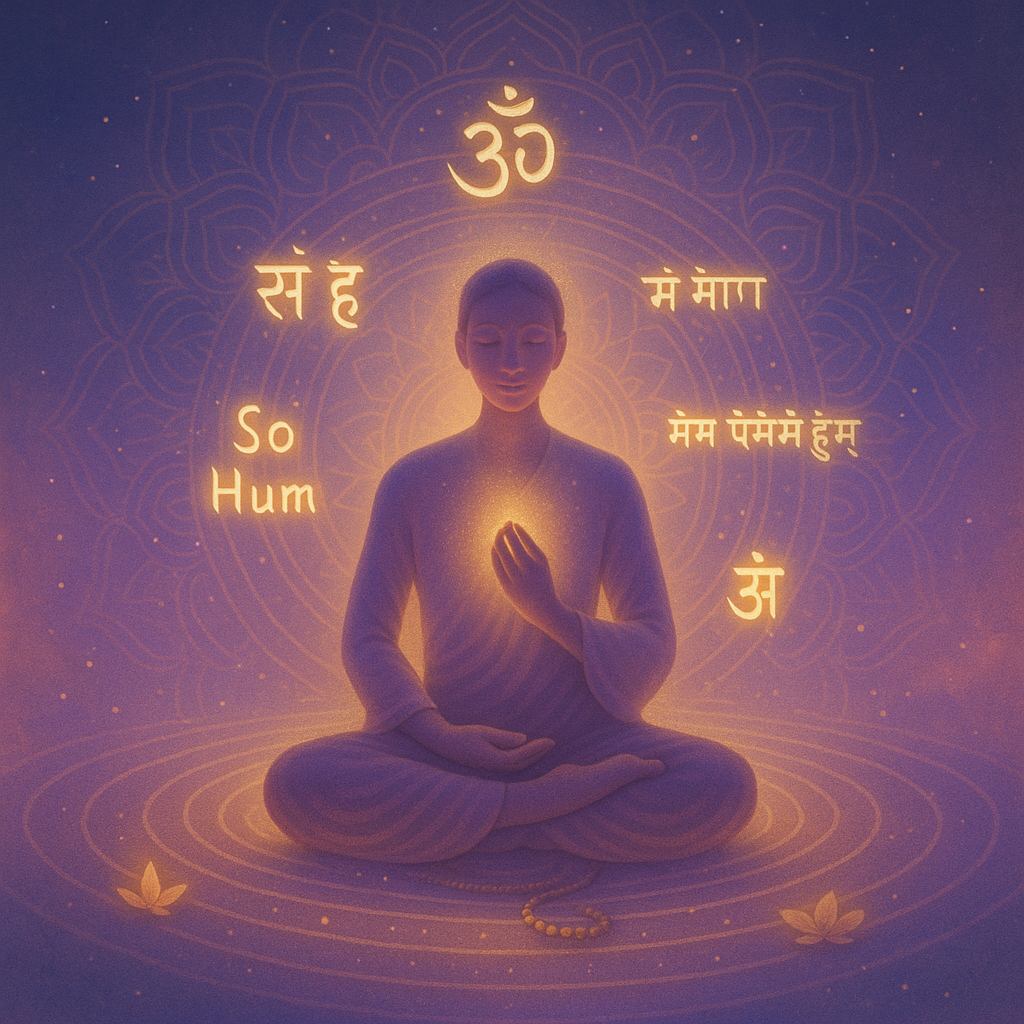
Chanting and mantra meditation is a sacred practice that uses repeated sound, vibration, and focused intention to calm the mind, open the heart, and align the practitioner with higher states of consciousness. Rooted in ancient spiritual traditions across Hinduism, Buddhism, Jainism, Sikhism, and various mystical lineages, mantra meditation harmonizes the subtle body, strengthens concentration, and awakens spiritual insight. The power of chanting lies in its vibrational resonance—each mantra carries an energetic frequency that influences the mind, emotions, and energetic field.
Purpose of Chanting and Mantra Meditation
Calming the Mind and Reducing Mental Noise
- Creates rhythmic focus that quiets scattered thoughts
- Engages the breath and voice to anchor attention
- Induces a meditative, coherent mental state
Raising Vibrational Frequency
- Mantra sound waves influence the nervous system and energy field
- Activates higher states of peace, clarity, and heart-centered awareness
- Supports emotional release and energetic cleansing
Connecting With the Sacred
- Invokes divine qualities or archetypal energies
- Deepens spiritual devotion and inner presence
- Strengthens connection to the higher self and universal consciousness
Foundations and Origins
Vedic and Hindu Traditions
- Mantras appear in the Vedas, among the world’s oldest spiritual texts
- Sacred syllables like OM, AUM, So Ham, Gayatri Mantra
- Used for purification, protection, and spiritual awakening
Buddhist and Tibetan Practices
- Mantras used for compassion, enlightenment, and wisdom
- Examples: Om Mani Padme Hum, Gate Gate Pāragate Pārasaṃgate Bodhi Svāhā
Sikh and Jain Traditions
- Emphasis on devotional chanting (kirtan)
- Focus on remembrance of the divine (Naam Simran)
Global and Modern Uses
- Used in yoga, mindfulness, sound healing, and holistic wellness
- Combines breath, rhythm, and sound to create inner harmony
Core Principles of Mantra Meditation
Sound as Vibration
- Everything in existence vibrates
- Mantras shift internal vibration to match desired states
- Sound influences brain waves, emotions, and energy flows
Repetition as Focus
- Repetition creates rhythm and stability
- Builds concentration (dharana) and leads to meditative absorption (dhyana)
Intention Shapes Energy
- The meaning or quality of the mantra directs its impact
- Combining intention with sound amplifies manifestation and healing
Breath and Voice Activation
- Speaking or chanting engages the breath and diaphragm
- Strengthens the mind–body connection
Types of Chanting and Mantra Meditation
Japa Meditation (Repetition With Mala Beads)
Purpose
- Count repetitions to maintain focus
- Commonly 108 repetitions per cycle
Method
- Recite mantra with each bead
- Helps develop discipline, grounding, and rhythmic flow
Vocal Chanting (Kirtan or Bhajan)
Purpose
- Uses melody, music, and group energy
- Awakens devotion (bhakti) and emotional release
Method
- Call-and-response or group chanting
- Creates collective resonance
Silent Mantra Meditation (Mental Repetition)
Purpose
- Internalized version without vocal sound
- Leads to deep stillness and subtle awareness
Method
- Repeat mantra silently in the mind
- Useful for private practice or deep concentration
Bija (Seed) Mantra Meditation
Purpose
- Uses powerful one-syllable sounds
- Activates specific chakras or energies
Examples
- LAM (Root), VAM (Sacral), RAM (Solar Plexus), YAM (Heart), HAM (Throat), OM (Crown)
Breath-Mantra Meditation
Purpose
- Coordinating mantra with inhalation and exhalation
- Slows the nervous system and deepens presence
Examples
- “So” (inhale) / “Ham” (exhale)
- “Sat” (inhale) / “Nam” (exhale)
How to Practice Chanting and Mantra Meditation
Step 1: Choose the Mantra
Consider:
- Emotional needs (peace, strength, healing)
- Spiritual intention (awakening, devotion, clarity)
- Chakra alignment (using bija sounds)
Choose a mantra that resonates deeply.
Step 2: Find a Comfortable Posture
- Sit upright with a relaxed, open body
- Keep shoulders down and spine aligned
- Hands on knees, in mudra, or holding mala beads
Step 3: Begin With Centering Breath
- Take slow, deep breaths
- Allow body and mind to settle
Step 4: Start Chanting or Repeating the Mantra
Options:
- Out loud (vocal chanting)
- Whispered
- Silent mental repetition
Maintain a gentle, steady rhythm.
Step 5: Synchronize Breath, Voice, and Attention
- Follow the natural flow of breath
- Allow sound to vibrate through chest, throat, and head
- Focus awareness on the mantra’s sound or meaning
Step 6: Enter a State of Flow
- As repetition continues, thoughts quiet
- Body relaxes and vibration increases
- Inner stillness or bliss may arise
Step 7: Close With Stillness
- Let chanting fade into silence
- Sit quietly and feel the energetic effects
- Offer gratitude for the practice
Benefits of Chanting and Mantra Meditation
Mental and Emotional Benefits
- Reduces anxiety and rumination
- Creates mental clarity and focus
- Strengthens emotional resilience
- Calms the nervous system
Physical and Energetic Benefits
- Lowers stress hormones
- Promotes relaxation
- Harmonizes subtle energy fields
- Supports breath regulation
Spiritual Benefits
- Opens the heart and deepens devotion
- Enhances intuition and inner guidance
- Strengthens connection to divine presence
- Supports awakening and expanded consciousness
Advanced Practices and Enhancements
Chakra-Targeted Mantras
- Use bija mantras to activate specific chakras
- Combine with visualization of color and light
Group Chanting or Kirtan
- Amplifies energy through collective resonance
- Supports emotional release and ecstatic states
Mantra With Musical Instrumentation
- Harmonium, drums, singing bowls, or chimes
- Enhances vibrational depth and atmosphere
Mantra With Movement
- Coordinate mantra with walking, yoga, or mudras
- Integrates sound with embodied awareness
Tantric or Esoteric Mantra Practices
- Uses longer, initiatory mantras
- Traditionally practiced with guidance from a teacher
Limitations and Considerations
Emotional Release
- Chanting can surface deep emotions
- Allow the process to unfold gently
Not a Replacement for Professional Care
- Supports emotional and spiritual health
- Should complement—not replace—therapy or medical treatment
Respect for Cultural and Spiritual Context
- Many mantras come from sacred lineages
- Approach the practice with reverence and understanding
Voice Fatigue or Overexertion
- Avoid straining the vocal cords
- Whisper or practice silently if needed
Key Symbols and Associations
Symbolic Elements
- Sound/Vibration: creative force of the universe
- OM/AUM: primordial vibration, cosmic unity
- Lotus: purity and transformation through sound
- Mala Beads: focus, devotion, and completion (108 cycles)
- Bell or Bowl: awakening clarity and clearing energy
Chanting and mantra meditation is a transformative practice that harmonizes the mind, body, and spirit through sound and vibration. Whether practiced silently or vocally, alone or in community, mantras awaken inner stillness, emotional clarity, and deep spiritual connection—inviting practitioners into a state of expanded awareness, peace, and divine resonance.