
Overview
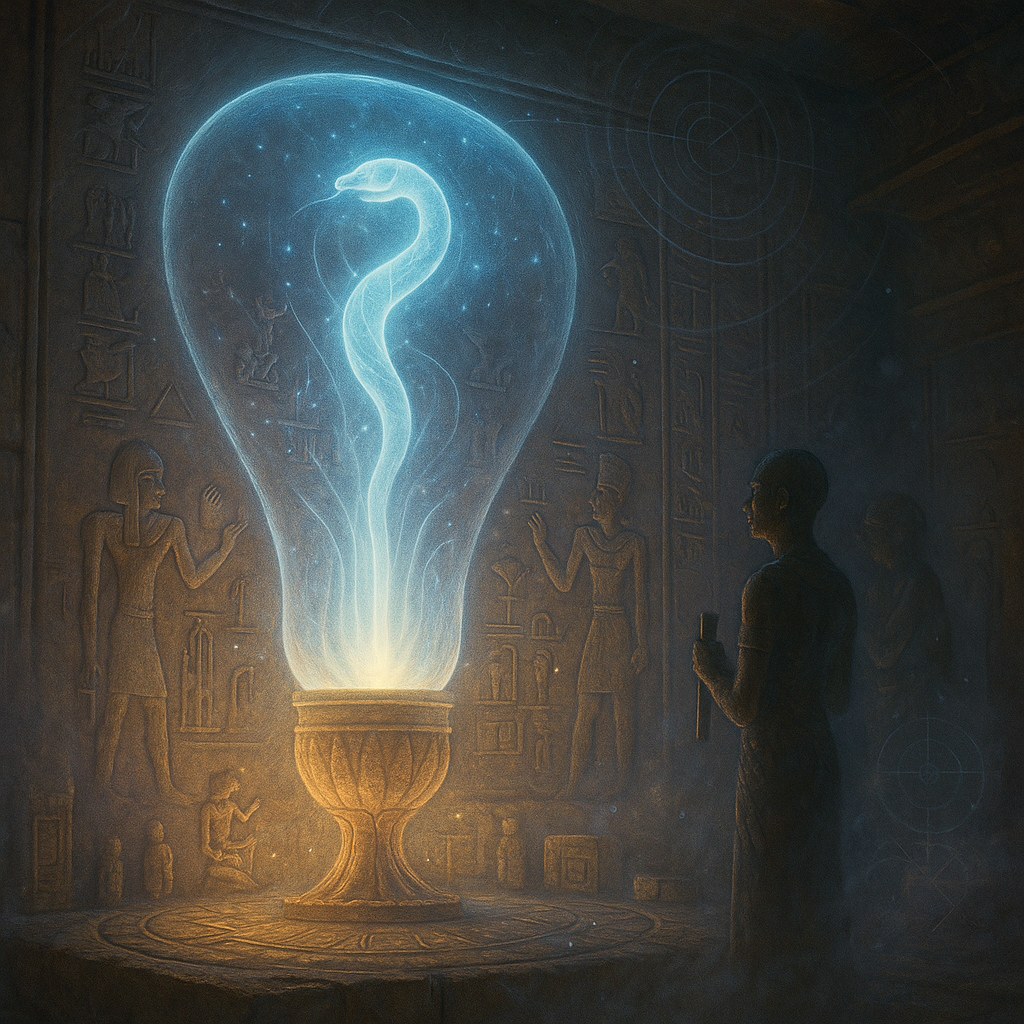
The Dendera Lightbulb refers to a famous carving found in the crypts of the Temple of Hathor at Dendera, Egypt. The relief depicts what appears to modern eyes as a large glass bulb containing a serpent-like figure, connected to a lotus-shaped base and supported by priestly figures.
While mainstream Egyptology interprets the scene as a symbolic depiction of mythological concepts, alternative researchers propose that it represents an ancient electrical device—sparking theories about lost technologies of ancient Egypt.
The carving remains one of the most discussed artifacts in alternative archaeology, blending mythology, symbolism, and speculation about ancient energy systems.
Spiritual and Cultural Significance
Sacred Symbol of Creation and Light
- Represents the Egyptian concept of the primordial serpent, rising from the lotus of creation
- Symbolizes cosmic energy, divine illumination, and rebirth
Possible Representation of Subtle Energies
- Seen by metaphysical researchers as a depiction of kundalini-like force
- May encode teachings about energy channels and spiritual awakening
Catalyst for Exploration of Ancient Knowledge
- Encourages inquiry into technologies or sciences lost to history
- Bridges material science and sacred symbolism
Historical and Archaeological Context
Temple of Hathor
Location and Era
- Built during the Ptolemaic period (circa 1st century BCE)
- Dedicated to Hathor, goddess of love, joy, music, and cosmic harmony
Underground Crypts
- Relief located deep within temple crypts
- Crypts used for ceremonial storage of sacred objects and ritual items
Discovery and Documentation
Modern Awareness
- First documented by early archaeologists and travelers
- Gained fame in the 20th century through alternative history researchers
Contextual Carvings
- Panels contain other mythological symbols—lotus, serpents, priests, sky boats
- Many interpretations rely on symbolic context rather than literal devices
Description of the Dendera Relief
Key Elements Depicted
The “Bulb”
- Elongated, oval shape resembling a large glass vessel
- Filled with a serpent-like form
The Serpent
- Represented as emerging or floating
- Associated in Egyptian myth with Harsomtus, a form of Horus
The Lotus Base
- Lotus is symbol of birth and creation
- Positioned as source from which serpent emerges
Supporting Figures
- Priests hold rod-like objects
- Some appear to balance or support the bulb
Djed Pillar
- Symbol of stability and the god Osiris
- Often interpreted as “power source” in speculative theories
Interpretations of the Dendera Lightbulb
1. Mainstream Egyptological Interpretation
Symbolic Representation of Creation
- Serpent emerging from lotus represents Harsomtus, the divine child
- Symbolizes the process of cosmic birth and illumination
Religious and Mythological Meaning
- Depicts priests participating in ritual scenes of divine emergence
- Not meant to represent technology
Artistic Convention
- Egyptian art uses abstract and symbolic forms
- Not literal depictions of objects
2. Alternative Technology Theory
Ancient Electrical Device Hypothesis
- Relief resembles a Crookes tube or early lightbulb
- Serpent seen as electrical discharge inside a glass vessel
Possible Function
- Djed pillar interpreted as high-voltage insulator
- Lotus base resembles power connector
Supporting Claims
- Lack of carbon soot in some temple chambers
- Suggests non-flame lighting may have been used
Counterpoints
- Soot absence not universal; torches and mirrors known to be used
- No physical evidence of wires, bulbs, or infrastructure
3. Esoteric and Energetic Interpretations
Kundalini or Serpentine Energy
- Serpent represents a rising energy current
- Lotus symbolizes chakras or spiritual unfolding
Symbolic Depiction of Etheric Light
- Scene seen as encoding subtle energy principles
- Djed pillar as the spine or central energy channel
Mystical Teaching Panel
- Relief may convey inner alchemical concepts taught to initiates
Symbolism and Esoteric Meaning
The Lotus as Source of Life
Egyptian Symbolism
- Birth, regeneration, creation from primordial waters
Esoteric Interpretation
- Lotus as energy center or consciousness seed
The Serpent as Life Force
Egyptian Mythology
- Serpent linked to Harsomtus, creator child
- Represents emerging life energy
Esoteric Symbolism
- Similar to kundalini serpent rising within the human body
The Djed Pillar
Traditional Meaning
- Sacred symbol of Osiris and spiritual stabilization
Energetic Correspondence
- Represents the spine or energetic axis
- Seen as power source or conduit
Scientific and Experimental Perspectives
Electrical Reconstruction Experiments
Possible Voltage Output
- Replicas using copper and iron components produce small arcs
- Similar to experiments with Baghdad Battery
Plausibility Issues
- No archaeological evidence of wires or conductive materials
- Glass quality of ancient Egypt insufficient for vacuum tubes
Lighting in Ancient Egypt
Known Methods
- Torches, lamps, mirror systems
- Soot traces found in many temples
Underground Crypts
- Could have used reflective lighting or oil lamps
- Some soot absence remains unexplained
Influence on Modern Thought
Alternative Archaeology
- Dendera Lightbulb is a centerpiece debate in ancient technology theories
- Inspires discussion on lost sciences or advanced ancient knowledge
New Age and Metaphysical Communities
- Seen as symbolic blueprint for subtle-energy practices
- Used in meditations on light-body activation
Popular Culture
- Frequently appears in documentaries, books, and TV shows
- Symbol of ancient mystery and possible forgotten technologies
Cautions and Considerations
Symbolism vs. Literal Interpretation
- Egyptian art typically symbolic
- Literal reading may misinterpret cultural meaning
Lack of Supporting Evidence
- No physical electrical devices found in context
- Technological theory remains speculative
Respect for Cultural Context
- Interpretations should honor Egypt’s symbolic and ritual traditions
Key Associations
Energetic Correspondence
- Element: Light / Ether
- Themes: Illumination, creation, transformation, hidden knowledge
Spiritual Archetypes
- The light-bringer
- The cosmic child
- The temple initiate
- The keeper of mysteries
The Dendera Lightbulb – Evidence of Lost Knowledge? remains one of ancient Egypt’s most captivating enigmas. Whether interpreted as a symbolic representation of divine creation, a diagram of subtle energies, or a relic of forgotten technology, the carving continues to inspire profound curiosity. It invites us to explore the intersection of myth, symbolism, and human ingenuity—and to remain open to the possibility that ancient civilizations understood the world in ways we have yet to rediscover.