
Overview
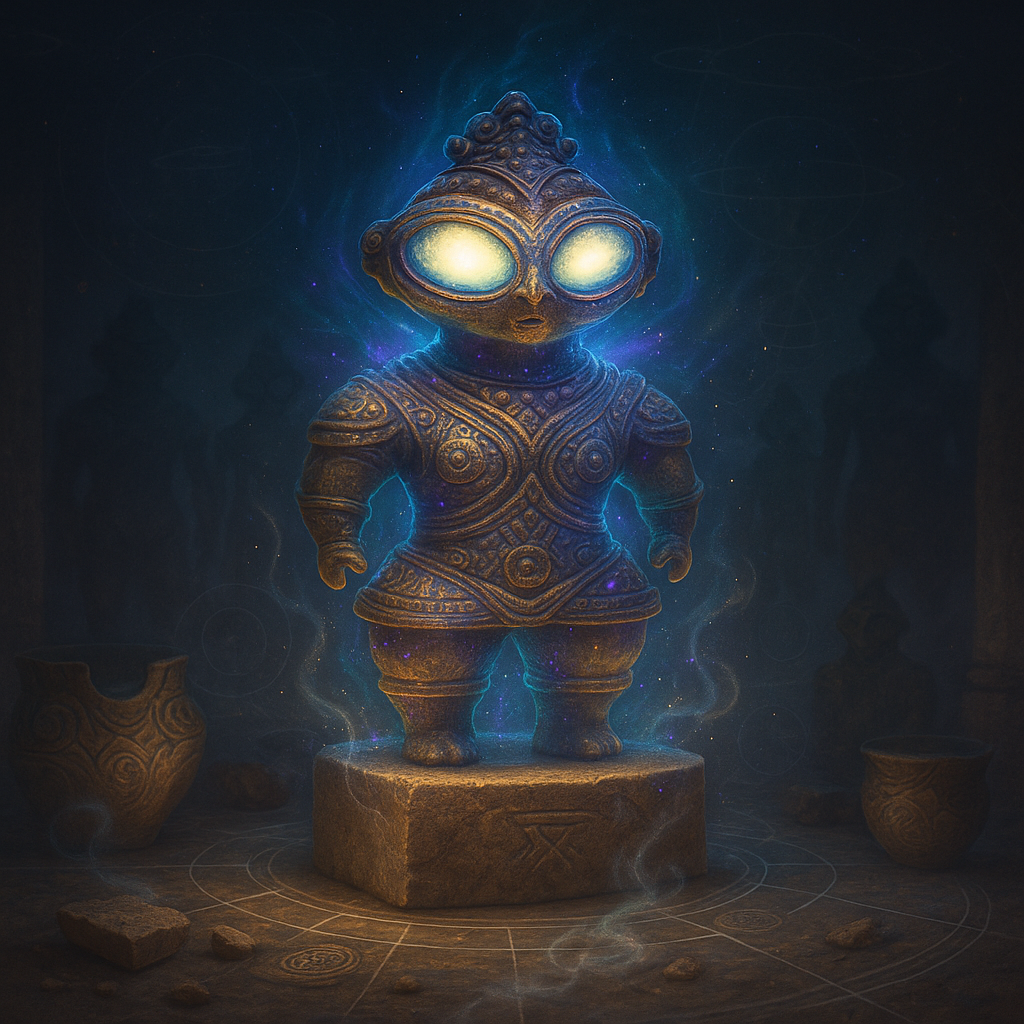
Dogū figurines are mysterious clay sculptures created during Japan’s Jōmon period (circa 14,000–300 BCE). Characterized by large almond-shaped eyes, ornate body patterns, and unusual proportions, these figurines have fascinated archaeologists, spiritual seekers, and alternative researchers alike.
While mainstream archaeology interprets Dogū as ritual objects connected to fertility, healing, or shamanic practices, their strikingly non-human appearance has led to widespread speculation about connections to extraterrestrial beings, ancient astronauts, or interdimensional entities.
Regardless of interpretation, Dogū stand as some of the most compelling artifacts of early Japanese culture, blending spiritual symbolism, artistic complexity, and mystery.
Spiritual and Cultural Significance
Shamanic and Ritual Purpose
- Believed to represent spiritual guardians, healers, or shamans
- Often associated with fertility, protection, and health
Connection to the Spirit World
- Large eyes and unusual features may signify beings with supernatural sight
- Represents communication with non-human or higher-dimensional forces
Symbol of Jōmon Cosmology
- Reflects a society deeply connected to nature, spirits, and mystical experience
Historical and Archaeological Context
Jōmon Culture
Timeframe
- One of the world’s oldest pottery-producing cultures
- Spanned over 10,000 years in prehistoric Japan
Society and Beliefs
- Hunter-gatherer culture with rich spiritual practices
- Engaged in ritual ceremonies, ancestor veneration, and shamanic traditions
Discovery of Dogū
Archaeological Sites
- Found across Japan in villages, burial sites, and ritual contexts
- Thousands of figurines discovered, though each is unique in design
Materials and Craftsmanship
- Made from fired clay
- Display highly detailed, patterned surfaces
- Specialized shapes, often female or abstract humanoid forms
Types and Designs of Dogū Figurines
1. Shakōki-dogū (Goggle-Eyed Figurines)
Features
- Oversized rounded “goggles”
- Bulky limbs and exaggerated torso
- Most often linked to extraterrestrial theories
Interpretation
- Represents enhanced or supernatural vision
- Possibly ceremonial armor or spirit sight
2. Heart-Shaped Dogū
Features
- Heart-shaped faces
- Highly stylized body patterns
Interpretation
- Symbolic of fertility or divine feminine energy
3. Pregnant or Fertility Dogū
Features
- Rounded belly, full hips, and emphasized breasts
Interpretation
- Clearly linked to fertility rites and birth rituals
4. Animal-Inspired Dogū
Features
- Hybrid or zoomorphic designs
- May represent spirit animals or guardian entities
The Extraterrestrial Interpretation
1. Physical Resemblance to Modern Space Suits
Goggle-like Eyes
- Strong similarity to modern astronaut visors
- Suggests protection against bright light
Body Armor Appearance
- Exaggerated torso and limbs resemble environmental suits
- Decorative patterns could mimic tubing or technical components
2. Non-Human Facial Proportions
Alien-Like Features
- Large, slanted almond eyes
- Tiny or absent mouths
- Elongated heads
Comparison to Modern UFO Lore
- Reflects “grey alien” archetypes
- Suggests ancient contact with non-human intelligences
3. Ancient Astronaut Theories
Proposed Insights
- Dogū may depict extraterrestrial visitors encountered by Jōmon people
- Figurines serve as records of beings from the sky
Cultural Parallels
- Similar theories applied to Sumerian gods, Olmec statues, and Nazca lines
4. Interdimensional or Spirit Beings
Shamanic Visions
- Features could reflect beings encountered during altered states
- Represents entities from astral or dream realms
Mainstream Archaeological Interpretations
1. Fertility and Healing Figures
Symbol of Women and Birth
- Many Dogū emphasize feminine features
- Some broken intentionally as part of healing rituals
2. Shamanic Garb and Ritual Attire
Ceremonial Outfits
- Large eyes and ornate patterns may represent masks or ritual clothing
Transformational Symbolism
- Dogū represent shamans shifting into spiritual forms
3. Expression of Jōmon Mythology
Humans + Spirits
- Figurines combine human, animal, and cosmic elements
- Reflect rich cosmological storytelling
Symbolism and Esoteric Meaning
Vision and Perception
Enlarged Eyes as Spiritual Sight
- Symbolize ability to perceive unseen realms
- Represent clairvoyance or divine vision
Transformation and Transcendence
Hybrid Forms
- Symbolize spiritual transformation or ascension
- Bridge physical and spirit worlds
Protection and Healing
Ritual Use
- Burial and breakage patterns suggest healing rites
- Served as sanctuary for spiritual forces
Rebirth and Fertility
Cycles of Life
- Many Dogū connected to birth, motherhood, and cosmic regeneration
Mystical and Metaphysical Perspectives
Dogū as Energetic Guardians
High-Vibration Artifacts
- Some practitioners believe they hold protective frequencies
- Used in modern spiritual work for grounding and ancestral connection
Memory of Ancient Contacts
Collective Consciousness Theory
- Dogū may hold symbolic memory of ancient sky beings
- Encoded message from humanity’s distant past
Keys to Lost Knowledge
Jōmon Spiritual Technology
- Figurines may represent energetic practices or shamanic technologies
- Similar to Tibetan tormas or Native American kachina dolls
Influence on Modern Culture
UFO and Ancient Alien Communities
- Dogū often cited as compelling visual evidence for ancient contact
- Featured in documentaries and books
Art and Pop Culture
- Influence character designs in manga, anime, and video games
- Seen as proto-science-fiction artifacts
Contemporary Spiritual Practices
- Used in meditation, ancestor work, and energy rituals
- Inspire modern ceramic artists exploring sacred symbolism
Cautions and Considerations
Respect for Cultural Heritage
- Dogū belong to Indigenous Japanese history
- Interpretations should be culturally sensitive
Distinguishing Myth from Archaeology
- No direct proof of extraterrestrial origin
- Recognize difference between artistic symbolism and literal depiction
Avoiding Over-Speculation
- Alternative theories are inspiring but speculative
- Should complement—not overshadow—Jōmon cultural context
Key Associations
Energetic Correspondence
- Element: Earth / Ether
- Themes: Ancestral wisdom, transformation, perception, otherworldly contact
Spiritual Archetypes
- The sky visitor
- The shaman
- The guardian spirit
- The cosmic feminine
The Dogū Figurines and Their Extraterrestrial Resemblance embody the rich spiritual world of the Jōmon people while also igniting modern fascination with ancient mysteries. Whether interpreted as ritual artifacts, symbolic representations of spirit beings, or evidence of contact with extraterrestrial intelligences, Dogū remain an extraordinary testament to humanity’s enduring curiosity about the cosmos, the unseen realms, and our origins.